
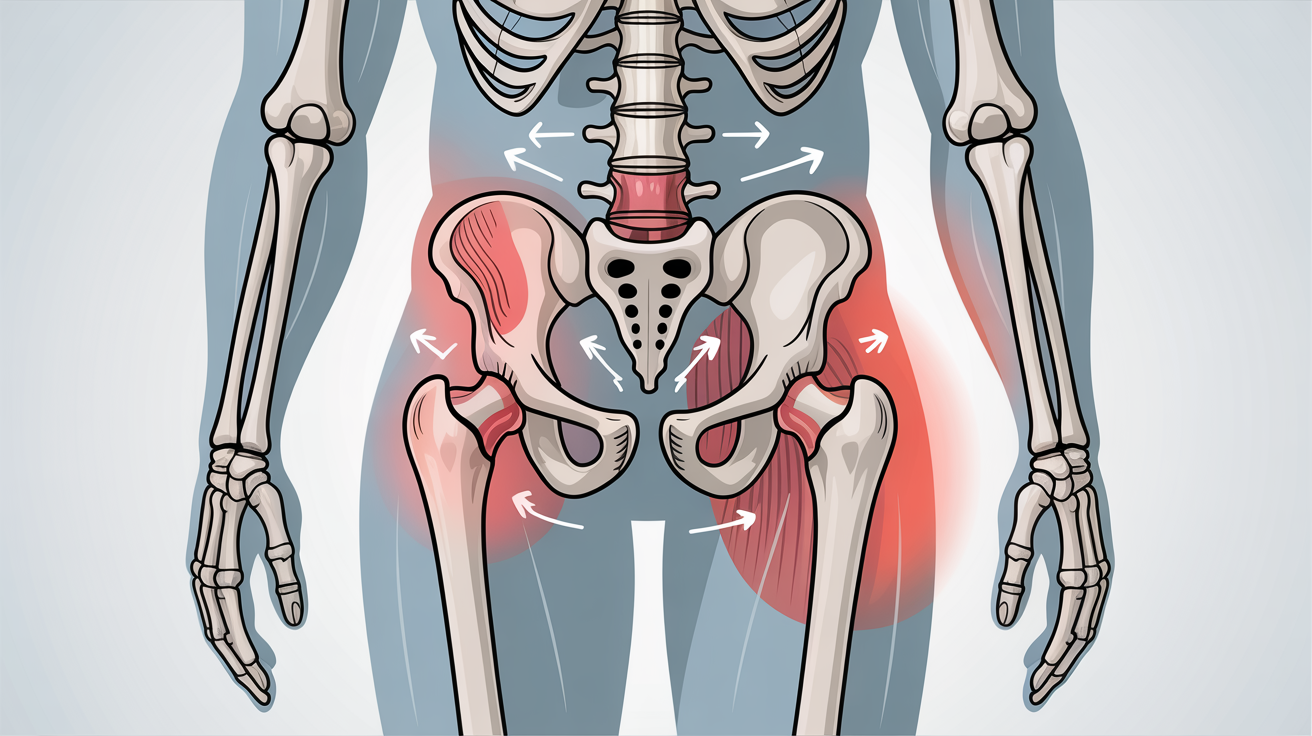
What is Hip and Leg Pain?
Imagine your legs as the strong pillars that support your body. Sometimes, these pillars can experience discomfort or pain. Hip and leg pain refer to any unpleasant sensation or discomfort in your hip or leg area, which can arise from various causes.
Signs and Symptoms
1. **Pain Location**: Hip and leg pain can occur in your hip joint, thigh, knee, calf, or even your ankle and foot.
2. **Pain Type**: It can feel like aching, throbbing, sharp, or burning pain, depending on the underlying cause.
3. **Stiffness**: You might experience difficulty moving your hip or leg as freely as usual.
4. **Swelling**: The affected area may become swollen and tender to the touch.
5. **Numbness and Tingling**: You may feel tingling or numbness in the affected leg.
6. **Weakness**: Muscle weakness or difficulty bearing weight on the leg can be a sign of hip or leg issues.
Treatment Options
1. **Conservative Approaches**: These are non-invasive methods:
– **Rest**: Taking a break from strenuous activities and allowing the affected area to heal.
– **Physical Therapy**: Physical therapists can guide you through exercises to strengthen and improve mobility in the hip and leg.
– **Heat/Cold Therapy**: Applying hot or cold packs can reduce pain and inflammation.
2. **Pharmacologic Approaches**: Medications can provide relief:
– **Pain Relievers**: Over-the-counter drugs like acetaminophen or ibuprofen can help manage pain.
– **Muscle Relaxants**: These can reduce muscle spasms and ease discomfort.
– **Prescription Medications**: Your doctor may prescribe stronger pain or anti-inflammatory medications.
3. **Pain Medicine Interventions**: These treatments target pain directly:
– **Corticosteroid Injections**: Doctors may use these injections to reduce inflammation and pain.
– **Ultrasound-Guided Procedures**: Ultrasound helps doctors aim injections accurately.
– **Fluoroscopic-Guided Procedures**: Fluoroscopy is like an x-ray that helps with precise injections.
4. **Surgical Procedures**: In severe cases, surgery may be considered:
– **Hip Replacement**: Surgeons replace a damaged hip joint with an artificial one.
– **Knee Surgery**: Procedures like meniscus repair or ligament reconstruction can relieve knee pain.
– **Back Surgery**: If the pain originates from the spine, surgery may be necessary to address the issue.
Anatomical Structures
Understanding your body’s structures can help you grasp hip and leg pain better.
– **Hip Joint**: This is where your thigh bone (femur) connects to your pelvis (hip bone).
– **Muscles and Tendons**: Muscles and tendons in your hip and leg help with movement.
– **Nerves**: Nerves run through your hip and leg, and issues with them can lead to pain, numbness, or weakness.
Conclusion
Hip and leg pain can be challenging, but there are ways to manage it. The most important thing is to work closely with healthcare professionals to find the right treatment plan for you. Don’t be afraid to ask questions and seek support from your medical team and loved ones. With the right care, many people with hip and leg pain can find relief and get back to enjoying their daily activities. Remember, you’re not alone in dealing with this condition, and there’s help available to make life more comfortable.