
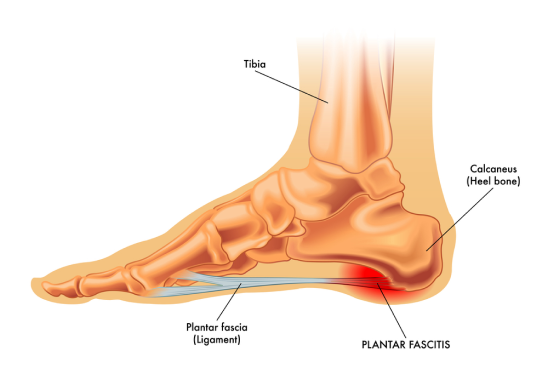
Causes of Plantar Fasciitis
Plantar Fasciitis can be caused by a number of things, such as:
- Overuse: Repetitive activities such as running or standing for long periods.
- Foot Mechanics: Flat feet, high arches, or abnormal walking patterns.
- Age: It commonly affects individuals between 40-60 years old.
- Obesity: Excess weight puts strain on the plantar fascia.
Symptoms of Plantar Fasciitis
Symptoms include:
- Heel Pain: Usually felt on the bottom of the heel and can be sharp or dull.
- Stiffness: Particularly after periods of rest, such as in the morning.
- Tenderness: Pain when touching the bottom of the heel.
- Swelling: Some individuals may experience mild swelling in the heel area.
Impact of Plantar Fasciitis
Plantar fasciitis can affect daily activities and lead to:
- Reduced Mobility: Pain may limit walking or standing.
- Decreased Quality of Life: Discomfort during physical activities.
Diagnosis of Plantar Fasciitis
Diagnosis typically involves:
- Medical History: Discussing symptoms and activity levels.
- Physical Examination: Palpation of the heel for tenderness and range of motion assessment.
- Imaging: X-rays or ultrasound to rule out other causes of heel pain.
Treatment of Plantar Fasciitis
Treatment options include:
- Conservative Treatments:
- Rest and Ice: Reduce inflammation and pain.
- Stretching Exercises: Stretching the calf muscles and plantar fascia.
- Orthotic Devices: Inserts for shoes to support the arch and reduce strain.
- Night Splints: Maintain stretch in the plantar fascia overnight.
- NSAIDs: Over-the-counter medications for pain relief.
- Medical Interventions:
- Corticosteroid Injections: Reduce inflammation in severe cases.
- Shock Wave Therapy: Sound waves to stimulate healing.
- Surgical Options:
- Tenex Procedure or Plantar Fascia Release: Rarely needed for persistent cases
Procedure Videos
Steroid Injection
Prognosis
Plantar fasciitis typically resolves within several months of starting treatment. Patients can expect a significant reduction in pain with consistent use of stretching exercises, orthotics, and nonsteroidal anti-inflammatory drugs (NSAIDs). Severe cases might require more advanced interventions like physical therapy or injections.
References
Cleveland Clinic. “Plantar Fasciitis.” Cleveland Clinic, https://my.clevelandclinic.org/health/diseases/14709-plantar-fasciitis
Mayo Clinic. “Plantar Fasciitis.” Mayo Clinic, https://www.mayoclinic.org/diseases-conditions/plantar-fasciitis/symptoms-causes/syc-20354846
MedlinePlus. “Plantar Fasciitis.” MedlinePlus, https://medlineplus.gov/ency/article/007021.htm