
Causes of Scoliosis
The cause of scoliosis is often unknown, especially in idiopathic scoliosis. Contributing factors include genetic predisposition when there is a family history of scoliosis, neuromuscular conditions such as cerebral palsy or muscular dystrophy, congenital scoliosis caused by spinal malformations present at birth, leg length discrepancies creating uneven pressure on the spine, and injuries or infections affecting spinal structures.
Symptoms of Scoliosis
Symptoms vary with the curve’s severity and type. Common signs include uneven shoulders or a more prominent shoulder blade on one side, uneven waist or hips, leaning to one side, and back pain especially in adults. Children may show visible spinal curvature during growth spurts.
Diagnosis of Scoliosis
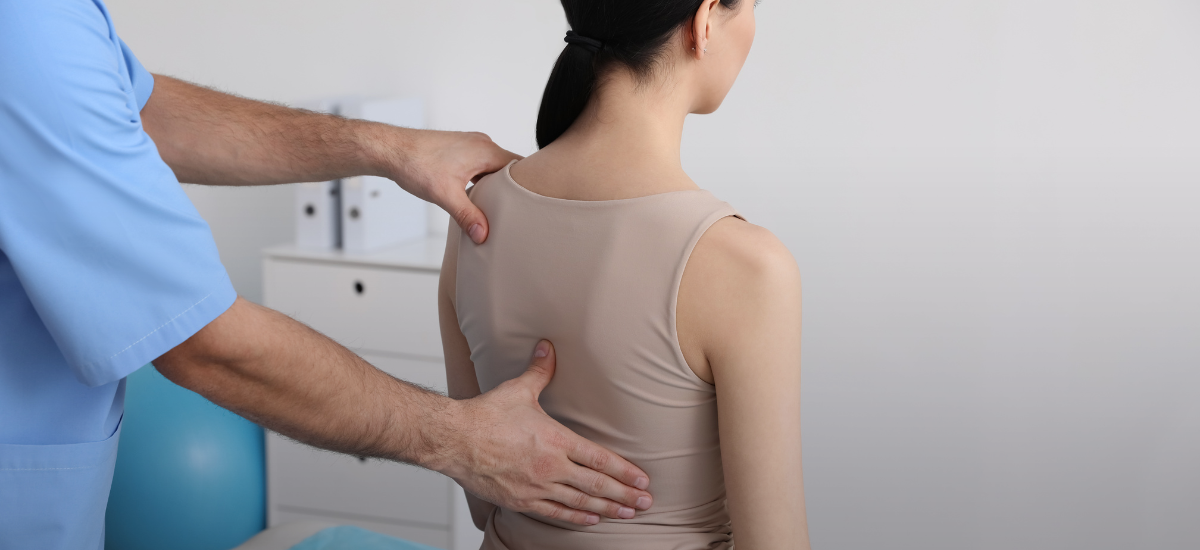
Diagnosis combines a physical examination and imaging tests. During the physical exam, a healthcare provider checks spinal alignment and posture and may perform the Adam’s forward bend test. Imaging tests such as X-rays confirm the curve and its degree. MRI or CT scans are used when more detailed spine images are needed.
Treatment of Scoliosis
Treatment depends on curve severity, age, and progression risk. Non-surgical care includes observation with regular check-ups to monitor changes, bracing to prevent worsening in children and teens with moderate scoliosis, and physical therapy to improve muscle strength, flexibility, and posture. Surgical care is reserved for severe or rapidly progressing curves and may involve spinal fusion to join vertebrae, growing rods to allow spinal growth in young children, or vertebral body tethering (VBT), a newer option using a flexible cord to correct the curve while preserving motion.
Procedure Videos
Scoliosis surgery
Prognosis of Scoliosis
Outcome depends on the type and severity of curvature and age at diagnosis. Mild scoliosis often stabilizes with monitoring and bracing. More severe or neuromuscular forms may require surgery, which typically improves pain, alignment, and spinal stability.
Resources
“Scoliosis.” Cleveland Clinic, 26 Jan. 2024, https://my.clevelandclinic.org/health/diseases/15837-scoliosis. Accessed 5 July 2024.
“Scoliosis.” Johns Hopkins Medicine, 2024, https://www.hopkinsmedicine.org/health/conditions-and-diseases/scoliosis. Accessed 5 July 2024.
Mayo Clinic Staff. “Scoliosis.” Mayo Clinic, 13 May 2023, https://www.mayoclinic.org/diseases-conditions/scoliosis/symptoms-causes/syc-20350716. Accessed 5 July 2024.