
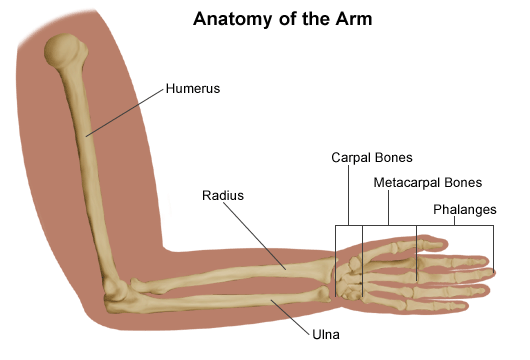
Causes of Elbow Arthritis
There are 3 types of elbow arthritis:
- Osteoarthritis: The least common type of elbow arthritis. It most commonly occurs as a result of overuse, or an injury such as dislocation or fracture.
- Post-traumatic arthritis: Arthritis caused by an injury to the elbow joint that causes inflammation.
- Rheumatoid arthritis: The most common type of elbow arthritis. It is an autoimmune disease in which the body attacks the joint tissues, causing inflammation and damage. Both elbows are often affected.
The most common cause of arthritis of the elbow is rheumatoid arthritis. Osteoarthritis and injuries can also cause arthritis in the elbow joint.
Symptoms of Elbow Arthritis
Symptoms of elbow arthritis can include:
- Pain: In the early stages of rheumatoid arthritis, pain may be primarily on the outer side of the joint. Pain generally gets worse as you turn (rotate) your forearm. The pain of osteoarthritis may get worse as you extend your arm. Pain that continues during the night or when you are at rest indicates a more advanced stage of osteoarthritis.
- Swelling: This is more common with rheumatoid arthritis.
- Instability: The joint isn’t stable and gives way, making it difficult or impossible to do normal daily activities.
- Lack of full movement: You are not able to straighten or bend the elbow.
- Locking: Your elbow joint catches or locks. This can happen with osteoarthritis.
- Stiffness. This happens particularly with arthritis that develops after an injury.
- Pain in both elbows: Having pain in both elbows or pain at the wrists or shoulders (or both) as well as pain in the elbows is a symptom of rheumatoid arthritis.
Prognosis of Elbow Arthritis
The elbow joint may swell as the disease progresses, but this is usually not an initial symptom. Eventually, people may also notice their ring and little finger becoming numb as the elbow swells and compresses the ulnar nerve, which is on the inside of the elbow. Additionally, if a person cannot move their elbow through its normal range of motion, it may stiffen in a bent position, increasing pressure around the ulnar nerve. This progression may be worse with RA elbow arthritis as the disease gradually destroys the bones and soft tissues.
Diagnosis of Elbow Arthritis
Your orthopaedic surgeon will evaluate your medical history and may conduct a variety of tests to determine if you have osteoarthritis. Diagnosis may include the following:
Physical examination: During a physical examination, your doctor will first look for tenderness and swelling. They will also look at the range of motion you have as well as identifying what positions cause pain to your elbow.
X-ray: X-rays often show the joint narrowing as well as any loose bodies (for example, bony pieces). If your pain is due to arthritis following an injury, the X-ray may show an improper joining or a failure to join of the elbow bones
Other Imaging Methods: MRI, Musculoskeletal ultrasound or CT scans may be utilized.
Pain Medicine Intervention
Pain management, pain medicine intervention and treatment include:
- Activity modification
- Corticosteroid injections
- Icing or applying heat to the inflamed elbow
- Pain or anti-inflammatory medication
- Patient education about symptom management
Treatment of Elbow Arthritis
Beyond pain medicine intervention, treatment options include:
Surgical Intervention: When conservative measures are ineffective or symptoms worsen, surgery
may be considered:
- Arthroscopy. Using pencil-sized instruments and two or three small incisions, the surgeon can remove bone spurs, loose fragments or a portion of the diseased synovium. This procedure can be used with both rheumatoid arthritis and osteoarthritis.
- Synovectomy. The surgeon removes the diseased synovium, the tissue that lines and lubricates the joints. Sometimes, a portion of bone is also removed to provide a greater range of motion. This procedure is often used in the early stages of rheumatoid arthritis.
- Osteotomy. The surgeon removes part of the bone to relieve pressure on the joint. This procedure is often used to treat osteoarthritis.
- Arthroplasty. The surgeon creates an artificial joint using either an internal prosthesis or an external fixation device. A total joint replacement is usually reserved for patients over 60 years old or patients with RA in advanced stages.
References:
- “American Academy of Orthopaedic Surgeons. ‘Osteoarthritis of the Elbow.’ OrthoInfo, https://orthoinfo.aaos.org/en/diseases–conditions/osteoarthritis-of-the-elbow/. Accessed 27 June 2024.”
- ArmDocs. “Elbow Arthritis.” ArmDocs, https://www.armdocs.com/condition/elbow-arthritis. Accessed 27 June 2024.
- “Cedars-Sinai. ‘Arthritis of the Elbow.’ Cedars-Sinai, https://www.cedars-sinai.org/health-library/diseases-and-conditions/a/arthritis-of-the-elbow.html. Accessed 27 June 2024.”
- Medical News Today. “Osteoarthritis of the Elbow: Symptoms, Causes, and Treatment.” Medical News Today, https://www.medicalnewstoday.com/articles/osteoarthritis-elbow#symptoms. Accessed 27 June 2024
- “Penn Medicine. ‘Elbow Arthritis.’ Penn Medicine, https://www.pennmedicine.org/for-patients-and-visitors/find-a-program-or-service/orthopaedics/elbow-pain/elbow-arthritis. Accessed 27 June 2024.”
What is Hand and Wrist Arthritis?
Arthritis is damage to the cartilage in joints. Arthritis is common in the upper extremities and causes pain and inflammation in the wrist joints and hands.
Causes of Hand and Wrist Arthritis
Approximately 1 in 7 Americans has arthritis in the wrist.
Risk factors for Hand Arthritis include:
- Age: Osteoarthritis is commonly seen after age 50. Rheumatoid arthritis typically first appears between the age of 35 and 50.
- Gender: Woman are more likely to develop hand arthritis
- Prior Injuries: If you’ve dislocated or broken any joints in your hands or fingers, you are more likely to develop arthritis.
- Race: whites are more often affected than African Americans.
- Weight: obese people are more likely to have hand OA than thinner people.
- Genetics: You’ve inherited genes that cause the development of arthritis.
- Joint issues: Joint infections, overuse, loose ligaments, and poorly aligned joints can also lead to hand or wrist arthritis.
There are multiple types of arthritis that affect your hand and wrist. They include the following:
- Osteoarthritis: known as “wear and tear” or degenerative arthritis, is the most common type of arthritis.
- Rheumatoid Arthritis: RA is a chronic autoimmune disease that destroys the cartilage at the end of bones
- Psoriatic Arthritis: Specific type of arthritis that affects skin and joints.
Symptoms of Hand and Wrist Arthritis
Hand Arthritis most commonly develops in:
- The base of the thumb, where the thumb and wrist join (the trapeziometacarpal or carpometacarpal joint)
- The joint closest to the fingertip (the distal interphalangeal joint)
- The middle joint of a finger (the proximal interphalangeal joint)
Symptoms usually start as dull or burning joint pain, appearing hours or a day after increased use of your hands, morning pain and stiffness in your hand(s) and swollen joints in your hand(s). Symptoms of hand arthritis could progress to:
- Pain may change from dull ache to sharp pain.
- Pain may wake you up at night.
- Pain may cause you to change the way you use your hand(s).
- Tissue surrounding your affected joint may become red and tender to the touch.
- You’ll feel grating, grinding, cracking or clicking (crepitus) when bending your fingers.
- Your fingers can’t fully open and close.
- Small bony nodules form on the middle joint of your fingers (called Bouchard’s nodes) or at the top joints of your fingers (called Heberden’s nodes).
- Your finger joints become large and deformed and abnormally bent, leaving your hands weak and less able to accomplish everyday tasks.
Wrist Arthritis Symptoms include:
- Reduced range of motion.
- Red, warm or swollen joints.
- Stiffness that’s worse in the morning and improves throughout the day.
- Wrist and hand weakness.
Prognosis of Hand and Wrist Arthritis
There is no cure for arthritis. However, you can usually manage mild to moderate symptoms with a combination of medication and non-medication approaches. Surgery may be an option if other treatments fail or the arthritis in your hands is severe. If wrist pain becomes severe and affects your ability to enjoy life, your healthcare provider can discuss surgery options.
Diagnosis of Hand and Wrist Arthritis
Your orthopaedic surgeon will evaluate your medical history and may conduct a variety of tests to determine if you have Hand and/or Wrist arthritis:
- Physical examination: Your doctor will examine how your hands look and work and may check other joints for signs of arthritis.
- X-ray: X-rays may show loss of space in your joints – indicating cartilage loss – and formation of bone spurs.
- Blood Test: A blood test for rheumatoid factor and other markers can help determine if the cause is rheumatoid arthritis.
- CT or MRI: Your orthopedist may want to examine the bones and joints themselves using a CT scan, or MRI.
Lab Tests
Your doctor will use several blood tests to help diagnose you with rheumatoid arthritis (RA) and other inflammatory conditions. These include:
- Rheumatoid Factor
- Anti-cyclic Citrullinated Peptide
- Erythrocyte sedimentation rate
- C-Reactive Protein
- Antinuclear Antibody
- HLA-B27
- Complete Blood Count
- Creatine Kinase
- Complement
- Cryoglobulins
Pain Medicine Intervention
Pain medicine interventions include conservative treatment options:
- Activity modification or immobilization of the hand
- Bracing / Splinting
- Corticosteroid injection into the wrist
- Pain medication or anti-inflammatories
- Physical therapy
- Transcutaneous Electrical Nerve Stimulation (TENS)
- Heat or Ice Application
Treatment of Hand and Wrist
Treatment options depend on the type of arthritis, stage of arthritis, how many joints are affected, your age, activity level, the hand affected (if it’s your dominant hand) and other existing medical conditions. If non conservative treatment and pain medicine intervention do not work, surgery options include:
Wrist Surgeries Include:
- Proximal row carpectomy: to remove a few carpal bones in the wrist, giving bones more room to move without friction.
- Denervation surgery: To disconnect nerves in the wrist joint, relieving pain.
- Total wrist arthroplasty (total wrist replacement): This surgery involves replacing a severe arthritic wrist joint with an artificial joint made of metal, plastic, silicone or other material.
- Total wrist fusion: For some younger individuals with advanced arthritis who require the use of their hands for work, our surgeons will perform a total wrist fusion. During this procedure, we fuse all of the bones of the wrist together, so the wrist is not able to move anymore. This procedure relieves pain and corrects deformities, but because the bones are fused together, the joint loses its natural mobility.
Hand Surgeries Include:
- Joint fusion (arthrodesis): This surgery uses a plate and screws to keep the bones of your joint together. You’ll have a more stable, pain-free joint, but will have limited flexibility and movement.
- Joint replacement (arthroplasty): Similar to other joint replacements, surgeons use an artificial implant made of plastic, ceramics, silicone or metals to replace your damaged joint. Keep in mind that hinged finger implants don’t mimic normal finger movement.
- Tendon transfer: Tendons connect muscles to bones. The tendons that control your fingers attach to muscles in your palm and forearm. Ongoing inflammation from arthritis can cause tendons to rupture. If this happens, a portion of a healthy tendon can be used to restore your hand function.
Procedure Videos
Steroid injection
Prevention of Hand and Wrist Arthritis
Arthritis can’t be prevented. However, you can watch for symptoms of arthritis as you age and see your healthcare provider if you notice changes in your joints. You can also take steps to manage certain risk factors including incorporating nutritious foods to nourish your body and maintain a healthy weight. Being overweight (a body mass index, or BMI, greater than 25) puts more stress on your joints. Don’t smoke. Smoking increases your risk of arthritis.
References:
- Aberdeen Virtual Hand Clinic. “Osteoarthritis on an X-ray.” Aberdeen Virtual Hand Clinic, https://aberdeenvirtualhandclinic.co.uk/osteoarthritis-on-an-xray/. Accessed 27 June 2024.
- Arthritis in wrist. Cleveland Clinic. https://my.clevelandclinic.org/health/diseases/21595-arthritis-in-wrist. Accessed June 27, 2024.
- Hand osteoarthritis (degenerative arthritis of the hand). WebMD. https://www.webmd.com/osteoarthritis/hand-osteoarthritis-degenerative-arthritis-of-the-hand. Accessed June 27, 2024.
- MedStar Health. ‘Hand and Wrist Arthritis.’ MedStar Health, https://www.medstarhealth.org/services/hand-and-wrist-arthritis. Accessed 27 June 2024.
- Osteoarthritis. Brigham and Women’s Hospital. https://www.brighamandwomens.org/orthopaedic-surgery/hand-and-upper-extremity/osteoarthritis. Accessed June 27, 2024.
- Osteoarthritis of the hands. Arthritis Foundation. https://www.arthritis.org/diseases/more-about/osteoarthritis-of-the-hands. Accessed June 27, 2024.
- Treatments for osteoarthritis in hands. Arthritis-Health. https://www.arthritis-health.com/types/osteoarthritis/treatments-osteoarthritis-hands. Accessed June 27, 2024.
- WebMD. “Blood Tests for Rheumatoid Arthritis.” WebMD, https://www.webmd.com/rheumatoid-arthritis/blood-tests. Accessed 27 June 2024.