
Causes Of Charcot Marie Tooth Disease?
The primary cause of CMT are genetic mutations. Here are some details:- Genetic mutations : CMT is caused by mutations in various genes that are critical for the normal function of peripheral nerves. These mutations can be inherited in several patterns:
- Autosomal Dominant : A single copy of the mutated gene from either parent can cause the disease.
- Autosomal Recessive : Two copies of the mutated gene, one from each parent, are necessary to cause the disease.
- X-Linked : The mutation is on the X chromosome, affecting males more severely because they have only one X chromosome.
Symptoms Of Charcot Marie Tooth Disease?
The symptoms can vary depending on the type and severity of the disease, but common symptoms include: Muscle Weakness:- Weakness in the lower legs and feet, often leading to difficulty in walking, frequent tripping, or falls.
- Weakness in the hands and forearms as the disease progresses.
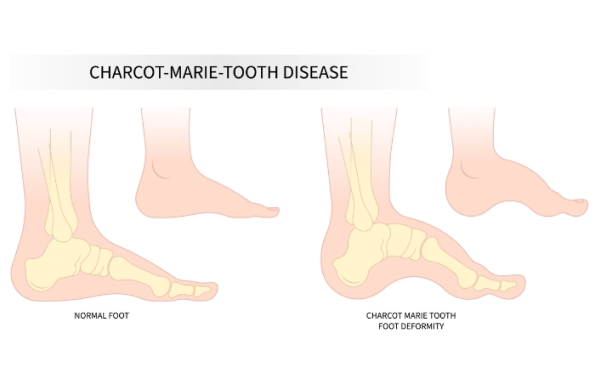
- High arches (pes cavus).
- Hammer toes (curled toes).
- Flat feet.
- Reduced ability to feel heat, cold, and touch, primarily in the feet and legs.
- Loss of reflexes in the lower limbs and, in later stages, in the upper limbs.
- Neuropathic pain, which can be severe and debilitating.
- Muscle cramps or aching.
Impacts Of Charcot Marie Tooth Disease?
The impacts of CMT disease can vary widely in severity and symptoms, but generally include the following:- Muscle Weakness And Atrophy : CMT primarily affects the muscles in the feet, lower legs, hands, and forearms. This can lead to muscle wasting and weakness, impacting mobility and dexterity.
- Foot Deformities: Common foot problems include high arches (pes cavus), hammertoes, and flat feet, which can cause pain and difficulty walking.
- Balance and Coordination Issues : Weakness in the lower extremities can affect balance and coordination, increasing the risk of falls.
- Sensory Loss:People with CMT may experience loss of sensation in the affected areas, leading to numbness or reduced ability to feel pain, heat, or cold.
Diagnosis Of Charcot Marie Tooth Disease?
Diagnosing Charcot-Marie-Tooth (CMT) disease typically involves a combination of clinical evaluation, family history, neurological examinations, and specialized tests. The process can include:
- Clinical Evaluation:
- Medical History: The doctor will take a detailed medical history, focusing on symptoms, their progression, and any family history of similar conditions.
- Physical Examination: A thorough physical examination will be conducted to assess muscle strength, tone, and bulk, especially in the lower legs and hands. The doctor will also look for foot deformities and signs of muscle atrophy.
- Genetic Testing:
- DNA Analysis: Genetic testing can identify mutations in specific genes known to cause CMT. This is the most definitive method for diagnosing the exact type of CMT.
- Family Genetic Studies: If a specific mutation is found in a family member, other relatives may also be tested to determine if they carry the same mutation.
Treatments For Charcot Marie Tooth Disease?
While there is no cure for Charcot-Marie-Tooth (CMT) disease, treatments focus on managing symptoms, maintaining mobility, and improving quality of life. The treatment plan is usually personalized based on the individual’s specific symptoms and needs. Common treatments include:
Physical Therapy
Exercise Programs: Tailored exercises can help maintain muscle strength, improve balance and coordination, and prevent muscle contractures.
Stretching: Regular stretching can help maintain flexibility and prevent or delay joint deformities.
Orthopedic Devices
Braces and Splints: Ankle-foot orthoses (AFOs) can support weak ankles and improve walking. Hand braces or splints can help with hand function.
Custom Footwear: Specially designed shoes can accommodate foot deformities and improve walking comfort.
Pain Management
Medications: Over-the-counter pain relievers (e.g., acetaminophen, ibuprofen) or prescription medications may be used to manage pain. In some cases, medications for neuropathic pain, such as gabapentin or pregabalin, may be prescribed.
Alternative Therapies: Some patients find relief through acupuncture, massage therapy, or other complementary treatments.
Surgical Interventions
Corrective Surgery: In severe cases, surgery may be necessary to correct foot deformities, such as high arches, hammertoes, or flat feet, to improve mobility and reduce pain.
Tendon Transfers: Surgical procedures to transfer tendons can help improve foot and hand function.
Treatment Videos
Prognosis
The progression of Charcot-Marie-Tooth disease varies significantly among individuals. Generally, CMT is a slowly progressive condition that leads to increasing disability over time. Most people with CMT have a normal life expectancy, but their quality of life can be affected by muscle weakness and sensory loss. Physical therapy, occupational therapy, and, in some cases, orthopedic surgery can help manage symptoms and maintain function.
Citations
National Institute of Neurological Disorders and Stroke (NINDS). (2020). Charcot-Marie-Tooth Disease Fact Sheet. Retrieved from NINDS
- Pareyson, D., Saveri, P., & Pisciotta, C. (2017). New developments in Charcot-Marie-Tooth neuropathy and related diseases. Current Opinion in Neurology, 30(5), 471-480.
- England, J. D., Gronseth, G. S., Franklin, G., Miller, R. G., Asbury, A. K., Carter, G. T., & Cohen, J. A. (2009). Practice parameter: evaluation of distal symmetric polyneuropathy: role of laboratory and genetic testing (an evidence-based review). Neurology, 72(2), 185-192.
- Notermans, N. C., Wokke, J. H., & Franssen, H. (1994). Chronic dysimmune neuropathy: long-term treatment with intravenous immunoglobulin. Brain, 117(4), 841-847.
Pain Medicine Interventions
Pain management in CMT patients may involve the use of medications such as NSAIDs, anticonvulsants (like gabapentin or pregabalin), and antidepressants (like amitriptyline or duloxetine) to manage neuropathic pain. Additionally, physical therapy and occupational therapy can play a crucial role in managing pain and improving mobility.
Associated Conditions
- Foot Deformities: High arches (pes cavus), hammertoes, and flat feet are common in CMT and may require orthopedic interventions.
- Gait Abnormalities: Due to muscle weakness, many individuals with CMT develop a distinctive high-stepping gait known as foot drop.
- Peripheral Neuropathy: CMT primarily affects peripheral nerves, leading to numbness, tingling, and pain in the extremities.
Lab Tests
- Genetic Testing: Can confirm the diagnosis by identifying mutations in specific genes associated with CMT.
- Nerve Conduction Studies (NCS): Measure the speed and strength of signals traveling in the peripheral nerves.
- Electromyography (EMG): Assesses the electrical activity of muscles.