
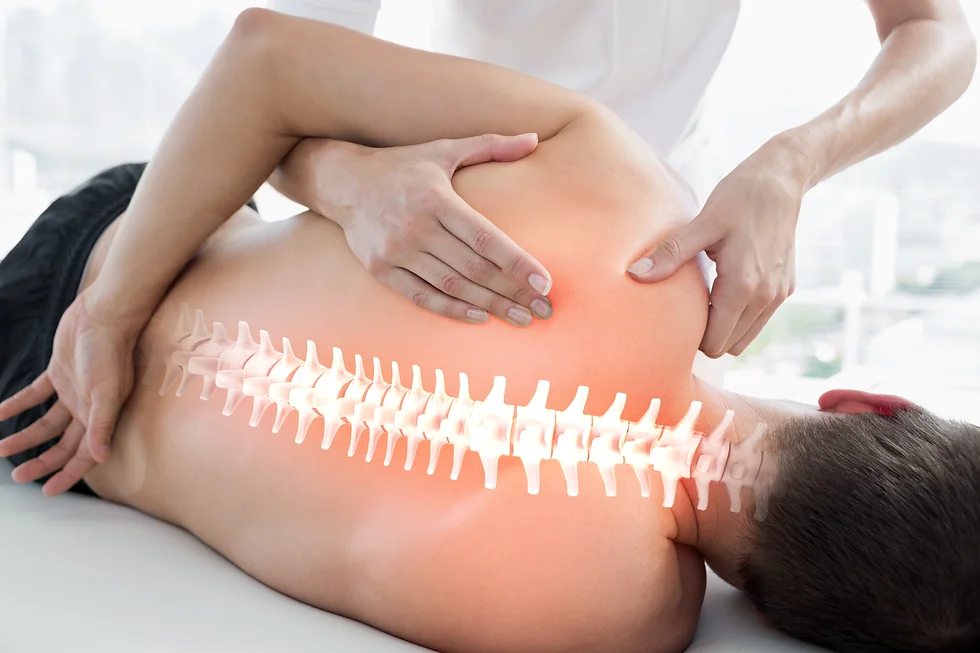
Causes of Degenerative Disc Disease
DDD usually develops as part of aging, but other risk factors can contribute:
-
Age-related changes: Discs lose water content and elasticity, reducing shock absorption.
-
Injury or trauma: Sudden impact or repetitive strain can accelerate disc breakdown.
-
Lifestyle factors: Smoking, obesity, or heavy physical labor increase pressure on discs.
-
Genetics: A family history of joint or spinal issues can raise susceptibility.
Symptoms
Not everyone experiences symptoms. When they occur, they may include:
-
Persistent back or neck pain that worsens with sitting, bending, or twisting.
-
Numbness or tingling that radiates to the arms or legs.
-
Muscle weakness or limited spinal flexibility.
In some people, pain improves over time as discs fully degenerate and stop releasing inflammatory proteins.
Impact of Degenerative Disc Disease
Worsening of DDD can lead to several conditions:
- Herniated discs: When the fluid escapes through newly made cracks in the discs, causing the disc to bulge and even break open. This can cause damage to the nerve roots around the disc.
- Spinal stenosis: When the body reacts to the narrowing space and stress on the discs by creating bone spurs to stop the excess motion within the spine. The spurs can grow into the spinal canal and apply painful pressure on the spinal cord and surrounding nerve roots.
- Endplate degeneration: As mentioned before, when the discs have degenerated until there is nothing left to cushion the endplates of the vertebrae, the endplates themselves begin to degenerate.
Related Conditions and Complications
Untreated or advanced DDD can lead to:
-
Herniated discs: Disc material protrudes and irritates nearby nerves.
-
Spinal stenosis: Bony overgrowth narrows the spinal canal, causing nerve pressure.
-
Endplate degeneration: Loss of cushioning leads to vertebral endplate damage and inflammation.
Diagnosis
A thorough evaluation typically includes:
-
Medical history and physical exam: Reviewing symptoms and spine flexibility.
-
Imaging tests: X-rays, MRI, or CT scans to assess disc height, bulging, or nerve compression.
Treatment Options
Conservative Care
-
Medications: Over-the-counter pain relievers (acetaminophen, ibuprofen) or prescription anti-inflammatory drugs.
-
Physical therapy: Strengthening and stretching exercises to stabilize the spine.
-
Lifestyle adjustments: Maintaining healthy weight, avoiding heavy lifting, and practicing good posture.
-
Heat and cold therapy: To ease pain and reduce inflammation.
Advanced Interventions
-
Epidural steroid injections: Reduce inflammation around affected nerves.
-
Platelet-rich plasma (PRP) or stem cell therapy: Regenerative approaches to repair tissue and potentially restore disc height.
-
Spinal cord stimulation: Electrical impulses to block pain signals.
Surgical Options
If conservative care is not effective, surgical treatments may be considered:
-
Decompression surgery: Removes pressure from nerve roots.
-
Spinal fusion or dynamic stabilization: Stabilizes the spine and relieves pain.
-
Artificial disc replacement or nucleoplasty: Replaces or reshapes damaged discs to maintain flexibility.
Supportive Care and Follow-up
Early treatment and regular monitoring can slow progression and relieve pain. Most patients benefit from a combination of targeted therapy and lifestyle modifications.
For expert evaluation and personalized treatment, visit Maywell Health or contact our care team to schedule an appointment.
Procedure Videos
Epidural Steroid Injection
Microdiscectomy
References
https://arizonapain.com/conditions/degenerative-disc-disease/
https://www.treatingpain.com/conditions/degenerative-disc-disease-ddd-/
https://www.spine-health.com/conditions/degenerative-disc-disease
https://novusspinecenter.com/pain-conditions/degenerative-disc-disease
https://www.joionline.net/trending/content/degenerative-disc-disease