
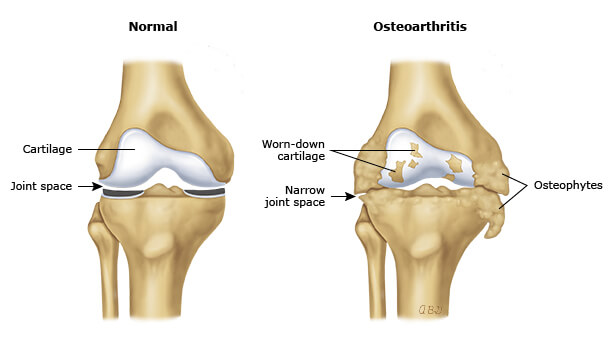
Causes of Degenerative Joint Disease
Several factors can lead to DJD:
-
Aging: Natural wear and tear of cartilage over time
-
Genetics: A family history of osteoarthritis increases risk
-
Joint Trauma or Repetitive Stress: Injuries or repetitive movement can damage cartilage
-
Obesity or Heavy Physical Labor: Excess weight or strain speeds up joint degeneration
Symptoms of Degenerative Joint Disease
Symptoms usually develop gradually and worsen with time:
-
Persistent joint pain ranging from mild to severe
-
Morning stiffness or stiffness after inactivity
-
Swelling and tenderness around joints
-
Loss of flexibility or decreased range of motion
-
A popping or crunching sound during movement
Impact of Degenerative Joint Disease
If left untreated, DJD can cause:
-
Chronic Pain: Limiting daily activities and affecting mental well-being
-
Muscle Atrophy: Decreased activity leads to muscle weakness and instability
Diagnosis
To confirm DJD, healthcare providers may recommend:
-
Medical History & Physical Exam: To review symptoms, prior injuries, and joint function
-
Imaging: X-rays, MRI, or CT scans to detect cartilage loss or bone changes
-
Lab Tests: To rule out other forms of arthritis
Treatment Options
Management focuses on pain relief, preserving joint function, and slowing progression.
Non-Surgical Care
-
Medications: Over-the-counter or prescription NSAIDs, pain relievers, or muscle relaxants
-
Physical Therapy & Exercise: To strengthen muscles and improve mobility
-
Steroid Injections: To reduce inflammation and pain
-
Lifestyle Changes: Weight management and low-impact exercise
-
Assistive Devices: Braces or orthotics to ease stress on joints
Surgical Treatments
Recommended for severe or unresponsive cases:
-
Osteotomy: Removing bone spurs and reshaping bones
-
Joint Fusion: Permanently joining bones to reduce pain
-
Total Joint Replacement: Replacing damaged joints with artificial implants to restore movement
Long-Term Outlook
While DJD cannot be cured, early diagnosis and proper treatment can slow disease progression and preserve mobility. Many patients manage symptoms successfully with tailored treatment and lifestyle adjustments.
For expert evaluation and a customized care plan, visit Maywell Health or contact us to book an appointment.
Procedure Videos
Joint Injection
Peripheral Nerve Blocks
References
https://my.clevelandclinic.org/health/diseases/5599-osteoarthritis
https://www.niams.nih.gov/health-topics/osteoarthritis
https://www.arthritis.org/diseases/osteoarthritis
Verhaar J. B | Degenerative and Inflammatory Joint Diseases. In: Verhaar JAN, Kjærsgaard-Andersen P, Limb D, et al., editors. The EFORT White Book: “Orthopaedics and Traumatology in Europe” [Internet]. Lowestoft (UK): Dennis Barber Ltd; 2021. Available from: https://www.ncbi.nlm.nih.gov/books/NBK585963/