
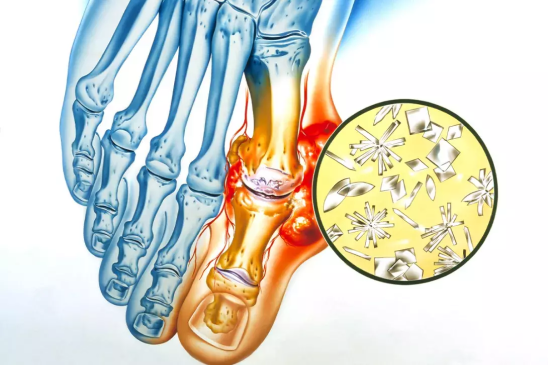
Causes of Gout and Pseudogout
- Gout: Caused by the buildup of uric acid crystals in the joints, often due to high levels of uric acid in the blood.
- Pseudogout: Caused by the deposition of calcium pyrophosphate crystals in the joints.
Risk Factors for Gout
Risk factors for gout include:
- Diet: High intake of purine-rich foods (e.g., red meat, seafood).
- Medical Conditions: Obesity, diabetes, high blood pressure, kidney disease.
- Genetics: Family history of gout.
- Medications: Certain medications can increase uric acid levels.
Risk Factors for Pseudogout
Risk factors for pseudogout include:
- Age: More common in older adults.
- Medical Conditions: Hyperparathyroidism, hemochromatosis, or hypothyroidism.
- Joint Trauma: Previous joint injury or surgery.
Symptoms of Gout and Pseudogout
Symptoms may include:
- Sudden Onset Pain: Intense pain in the affected joint (often the big toe in gout).
- Swelling: Joint may become swollen, red, and warm to the touch.
- Limited Mobility: Difficulty moving the affected joint.
- Recurrent Attacks: Periodic episodes of symptoms.
Impact of Gout and Pseudogout
Gout and pseudogout can impact daily life by:
- Reducing Mobility: Difficulty walking or using the affected joint.
- Causing Discomfort: Severe pain during attacks affecting quality of life.
- Joint Damage: Over time, repeated attacks can lead to joint damage and deformity.
Diagnosis of Gout and Pseudogout
Diagnosis involves:
- Medical History: Discussing symptoms, previous attacks, and risk factors.
- Physical Examination: Assessment of joint appearance, tenderness, and range of motion.
- Laboratory Tests: Blood tests to measure uric acid levels (for gout) or analyze joint fluid (for crystals).
Treatment of Gout and Pseudogout
Treatment options include:
- Acute Attack Management:
- NSAIDs: Nonsteroidal anti-inflammatory drugs for pain relief.
- Colchicine: Medication to reduce inflammation and pain.
- Corticosteroids: Injections into the affected joint for severe cases.
- Long-Term Management:
- Medications: To lower uric acid levels (e.g., allopurinol, febuxostat).
- Dietary Changes: Limiting purine-rich foods and alcohol.
- Lifestyle Modifications: Weight management and regular exercise.
- Fluid Intake: Increasing fluid intake to help excrete uric acid.
- Management of Pseudogout:
- Similar Acute Treatments: NSAIDs, colchicine, or corticosteroids.
- Addressing Underlying Conditions: Treating underlying medical conditions if present.
- Joint Protection: Resting the joint during acute attacks and using supportive devices.
Procedure Videos
Prognosis
Gout is treatable, and if detected early, most people with gout can live normally. With proper treatment (i.e. medication) and lifestyle changes, individuals can manage symptoms and reduce flare-ups.
Although there is no cure for pseudogout, effective management can prevent joint damage and improve symptoms. Pseudogout can be managed with treatments like NSAIDs and corticosteroids.
References
Mayo Clinic. “Gout.” Mayo Clinic, https://www.mayoclinic.org/diseases-conditions/gout/symptoms-causes/syc-20372897
American College of Rheumatology. “Gout.” American College of Rheumatology, https://www.rheumatology.org/I-Am-A/Patient-Caregiver/Diseases-Conditions/Gout
American College of Rheumatology. “Calcium Pyrophosphate Deposition Disease (Pseudogout).” American College of Rheumatology, https://rheumatology.org/patients/calcium-pyrophosphate-deposition-cppd