
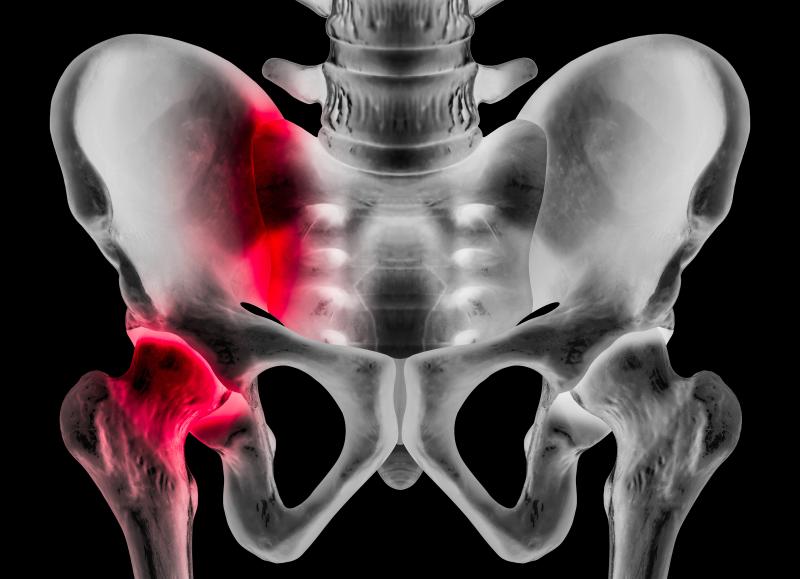
Causes of Hip Osteoarthritis
Hip Arthritis can be caused by various factors, including:
Degenerative Changes: As we age, the cartilage between our joints becomes thin and less flexible. It is regarded as regular wear and tear of the body.
History of High Impact Activity: Elite athletes who participate in years of direct impact sports (like football or hockey) are at higher risk to wear down hip joint cartilage.
Trauma: Previous hip injuries or accidents can contribute to the development of hip osteoarthritis.
Congenital Factors: Some individuals may have poor bone alignment between the hip ball and socket from birth, predisposing them to arthritis later in life.
Symptoms of Hip Osteoarthritis
Hip osteoarthritis can cause a dull, aching hip pain, however symptoms can vary widely and may gradually develop and worsen over time. The common symptom of hip osteoarthritis is mild to intense hip pain. The pain is relieved with rest. Other symptoms include:
- Hip pain aggravated by rising for a seated position
- Pain with weight bearing activities
- Pain with bending to put on shoes and getting in and out of a car
- Stiffness
- Decreased range of motion
- Hip crunching or popping
Impact of Hip Osteoarthritis
Hip Osteoarthritis can lead to chronic pain. Joint pain and stiffness can make daily tasks difficult to complete. This can lead to depression and sleep disturbances due to the pain of the hip osteoarthritis.
Diagnosis of Hip Osteoarthritis
Diagnosing hip osteoarthritis typically involves:
Medical History: Discussion of symptoms, past medical conditions, and any history of hip injuries.
Physical Examination: Assessment of reflexes, muscle strength, and sensation.
Diagnostic Imaging: X-rays to assess how much space there is in the joint (no space or abnormally small space indicates a loss of cartilage), MRI scans to visualize hip structures and detect joint space narrowing, in some cases.
Treatment of Hip Osteoarthritis
Treatment options include:
Conservative Treatments: Non-surgical approaches include:
Medications: Such as nonsteroidal anti-inflammatory drugs (NSAIDs) or muscle relaxants for pain management.
Physical Therapy: Exercise keeps joint lubricated and maintains range of motion.
Activity Modification: Cutting down on movements or labor that intensifies the hip pain.
Steroid Injections: Targeted injections to reduce inflammation and alleviate pain.
Supportive Devices: Some patients find relief with cushioning shoe inserts, a cane, a waker.
Surgical Intervention: When conservative measures are ineffective or symptoms worsen, surgery may be considered:
Hip Arthroscopy: Removing bone spurs or other structures irritating the hip joint
Hip Resurfacing: Joint surfaces are covered with a metal cap to reduce friction in the joint.
Total Hip Replacement: Replacing a damaged hip with an artificial implant to maintain hip mobility.
Prognosis: Hip osteoarthritis cannot be cured, however it can be manageable with pain control and routine exercise. The prognosis depends on the severity of the condition. Mild hip osteoarthritis can be managed with activity modification, pain management, and joint injections. However, moderate and severe hip osteoarthritis may need replacement to remedy pain.1
Procedure Videos
Intraarticular Hip Joint Injection
Peripheral Nerve Stimulation
Obturator/Femoral nerve block
References
https://arizonapain.com/conditions/osteoarthritis/
https://www.arthritis-health.com/types/osteoarthritis/hip-osteoarthritis-symptoms-and-signs
https://www.mayoclinic.org/diseases-conditions/osteoarthritis/symptoms-causes/syc-20351925
- Katz JN, Arant KR, Loeser RF. Diagnosis and Treatment of Hip and Knee Osteoarthritis: A Review. JAMA. 2021 Feb 9;325(6):568-578. doi: 10.1001/jama.2020.22171. PMID: 33560326; PMCID: PMC8225295.