
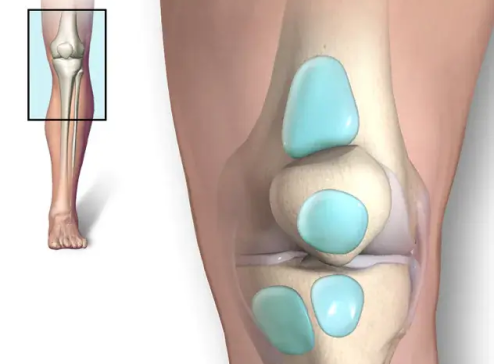
Location of bursae in the knee joint.
Causes of Knee Bursitis
Knee bursitis can result from various factors, including:- Repetitive Movements: Activities that involve frequent kneeling, such as gardening or scrubbing floors, can cause bursitis.
- Direct Trauma: Injury to the knee can cause the bursa to become inflamed.
- Infection: In the setting of a wound or trauma, bacteria can infect the bursa, leading to inflammation.
- Other Conditions: Conditions such as rheumatoid arthritis, thyroid disease, or gout can increase the risk of developing bursitis.
Symptoms of Knee Bursitis
Symptoms of knee bursitis include:- Pain: Pain around the knee, often worsening with movement or pressure.
- Swelling: Swelling over the affected bursa.
- Limited range of motion: Stiffness and reduced ability to extend the knee fully
- Tenderness: The area around the bursa may be tender to the touch.
- Warmth: The skin over the inflamed bursa may feel warm
Prognosis of Knee Bursitis
With proper treatment, most people with knee bursitis recover fully in a few weeks. The condition may improve with rest, ice, and medications. However, bursitis can recur, especially if the underlying causes are not addressed. Chronic or recurrent bursitis can result in permanent damage to the bursa requiring more intensive treatments.
Diagnosis of Knee Bursitis
Diagnosis typically involves a physical examination and medical history. Diagnostic tests may include:
- X-rays: To rule out other conditions such as fractures.
- MRI or Ultrasound: MRI is especially helpful in visualizing injuries to soft tissues such as ligaments, tendons, cartilage, bursae, and muscles.
- Aspiration: Fluid may be drawn from the bursa to check for infection or other conditions like septic arthritis or gout.
- Blood tests. Lab tests, such as a complete blood count (CBC), may be done to confirm or rule out other conditions such as infections or thyroid issues.
Pre-patellar (behind the patella) knee bursitis.
Pain Medicine Intervention of Knee Bursitis
Pain management options include:
- Over-the-counter pain relievers: NSAIDs or acetaminophen to reduce pain and inflammation.
- Prescription medications: In cases of severe pain, stronger medications may be prescribed.
- Corticosteroid injections: Injections directly into the b3ursa can reduce inflammation and pain.
Treatment of Knee Bursitis
Treatment focuses on reducing inflammation and relieving symptoms. Common treatments include:
- RICE Method:
- Rest and Activity Modification: Avoiding activities that aggravate the knee.
- Ice Therapy: Apply ice packs to the affected area to reduce swelling.
- Compress: the knee with a knee brace or wrap to help reduce swelling.
- Elevate: Raise the knee to help reduce swelling and keep fluid from accumulating around the knee.
- Physical Therapy: Exercises to strengthen the muscles around the knee and improve flexibility.
- Aspiration: Removing excess fluid from the bursa to reduce pain and swelling.
- Surgery: In severe or recurrent cases, surgical removal of the bursa may be necessary.
Procedure Videos
Intra articular knee injection
References
- “Knee Bursitis.” Mayo Clinic. https://www.mayoclinic.org/diseases-conditions/bursitis/symptoms-causes/syc-20353242. Accessed July 18, 2024.
- “Bursitis.” Cleveland Clinic. https://my.clevelandclinic.org/health/diseases/10918-bursitis. Accessed July 18, 2024.
- “Bursitis.” Johns Hopkins Medicine. https://www.hopkinsmedicine.org/health/conditions-and-diseases/bursitis. Accessed July 20, 2024.
- “Knee Pain.” Novus Spine Center. https://novusspinecenter.com/pain-conditions/knee-pain. Accessed July 20, 2024.
- “Complete Blood Count.” Mayo Clinic. https://www.mayoclinic.org/tests-procedures/complete-blood-count/about/pac-20384919. Accessed July 21, 2024.
- “Bursitis: Radiology reference article.” Radiopaedia. https://radiopaedia.org/articles/bursitis?lang=us. Accessed July 21, 2024.
- “Tendonitis vs Bursitis.” Treating Pain. https://www.treatingpain.com/conditions/tendinitis-bursitis/Accessed July 21, 2024.