
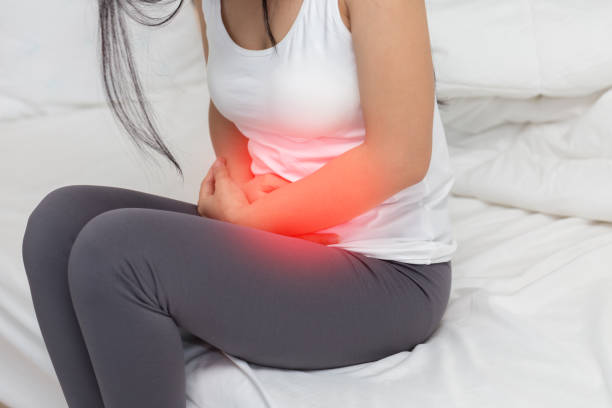
Causes of Ovarian Pain
Ovarian pain can be caused by various factors, including:
Ovarian Cysts: Fluid-filled sacs found on one or both ovaries. Most types of ovarian cysts are benign and likely to resolve on their own, but may cause symptoms such as pain. Cysts may rupture, leading to increased abdominal and pelvic pain.
Mittelschmerz Pain: Benign pain associated with ovulation, or the release of an egg from the ovary during a normal menstrual cycle. This pain is typically limited to one side and occurs 14 days prior to the start of menses.
Dysmenorrhea / Menstrual Pain: A cramping pain that may occur during or prior to menstruation as the uterine lining is shed.
Pelvic Inflammatory Disease: Certain infections, including sexually transmitted infections, may ascend from the external genitalia to involve structures in the abdomen, including the ovaries, causing pain. If left untreated, this can lead to long-term complications, such as infertility or an increased risk of ectopic pregnancy.
Ectopic Pregnancy: A pregnancy that implants outside of the uterus, most commonly in the fallopian tubes. This pregnancy is not viable and is a medical emergency, as rupture and complications may occur.
Ovarian Torsion: An ovary may twist around the ligaments that hold it in place, causing decreased blood flow to the ovary and severe pain. This pain is typically sudden in onset, severe, and unilateral. This is a medical emergency and surgical intervention is required to restore blood flow to the ovary.
Ovarian Mass: Tumors can originate in the ovary and cause ovarian pain.
Symptoms of Ovarian Pain
The symptoms of ovarian pain may vary based on the underlying cause. Lower abdominal or pelvic pain may be sharp, dull, or cramping, may be unilateral or bilateral, and may wax and wane or be constant. Other symptoms may include:
- Bloating
- Fullness or heaviness in the abdomen
- Unusual vaginal discharge
- Abnormal vaginal bleeding, such as following intercourse or between menstrual cycles
- Pain during intercourse
- Fever
- Weight loss
Impact of Ovarian Pain
Certain conditions causing ovarian pain may progress, worsen, or lead to complications.
- Pelvic Inflammatory Disease: If left untreated, pelvic inflammatory disease can result in significant scarring in the abdominal area and around the reproductive organs, leading to an increased risk of ectopic pregnancy, infertility, and chronic pelvic pain. The infection may also worsen and lead to the formation of an abscess or a bloodstream infection.
- Ectopic Pregnancy: If unmanaged, an ectopic pregnancy can cause the fallopian tube to rupture, leading to internal bleeding, risk for infection, and impaired future fertility.
- Ovarian Torsion: If unmanaged, ovarian torsion results in loss of blood flow to the ovary, causing tissue death and loss of the ovary and fallopian tube. This can lead to infection and impaired future fertility.
Diagnosis of Ovarian Pain
Diagnosing ovarian pain typically involves:
Medical History: Discussion of symptoms, past medical conditions, and menstrual and reproductive history.
Physical Examination: Examination of the abdomen and pelvis.
Diagnostic Imaging: Ultrasound may be performed to evaluate for the presence of a cyst or mass on the ovaries. Ultrasound may also be used to assess the blood flow to the ovaries. CT scans or MRI may be performed in specific cases, though ultrasound is typically the imaging modality of choice for ovarian concerns.
Laboratory Testing: Certain blood and urine tests may be performed to assess for infection, abnormal hormone levels, and pregnancy.
Laparoscopy: Minimally invasive surgical procedure may be performed to further examine the structures in the abdomen and pelvis, and/or for the treatment of certain ovarian conditions.
Prognosis of Ovarian Pain
Most cases of ovarian pain will resolve on their own or improve with treatment. More serious causes of ovarian pain, such as pelvic inflammatory disease, ectopic pregnancy, ovarian torsion, or ovarian mass will require further management to prevent serious complications.
Treatment of Ovarian Pain
Treatment options include:
Conservative Treatments: Non-surgical approaches include:
Pain Relieving Medications: Such as nonsteroidal anti-inflammatory drugs (NSAIDs) for pain management. Heating pads or water bottles may also alleviate pelvic pain associated with menstruation.
Hormonal Therapies: Oral contraception, intrauterine devices (IUDs), or other forms of hormonal birth control can help to regulate the menstrual cycle and reduce pain associated with hormonal and menstrual fluctuations.
Antibiotics: In cases of infection, such as pelvic inflammatory disease.
Pain Medicine Intervention: When conservative measures are ineffective or symptoms worsen, more invasive pain interventions may be considered:
Nerve Blocks: Targeted injections of local anesthetic near affected nerves to reduce pain.
Peripheral Nerve Stimulation: Electrodes are placed near affected peripheral nerves to interrupt pain signals to the brain.
Surgical Intervention: When conservative measures are ineffective or symptoms worsen, surgery may be considered:
Exploratory Laparotomy: Surgery that allows for internal examination of the abdomen and pelvis in order to diagnose and treat.
Laparoscopy: Minimally invasive surgery can be performed to both diagnose and treat pathology in the abdomen and pelvis.
Oophorectomy, Salpingectomy: In certain situations, the ovary may have to be removed (oophorectomy), as well as the fallopian tube (salpingectomy), such as with an ovarian mass or ruptured ectopic pregnancy.
Superior Hypogastric Nerve Block
Lumbar Sympathetic Nerve Block
Peripheral Nerve Stimulation
Obturator Internus Nerve Block
References
Herndon JR. 12 Possible Causes of Ovary Pain and Treatment Options. Verywell Health. Published November 30, 2010. https://www.verywellhealth.com/ovary-pain-causes-and-treatment-514437. Accessed December 6, 2024
Franco PN, García-Baizán A, Aymerich M, Maino C, Frade-Santos S, Ippolito D, et al. Gynaecological causes of acute pelvic pain: Common and not-so-common imaging findings. Life (Basel). 2023;13(10):2025.
Ovarian Cyst. https://www.pennmedicine.org/for-patients-and-visitors/patient-information/conditions-treated-a-to-z/ovarian-cyst. Accessed December 6, 2024
Ovary Pain. Cleveland Clinic. https://my.clevelandclinic.org/health/symptoms/24726-ovary-pain. Accessed December 6, 2024