
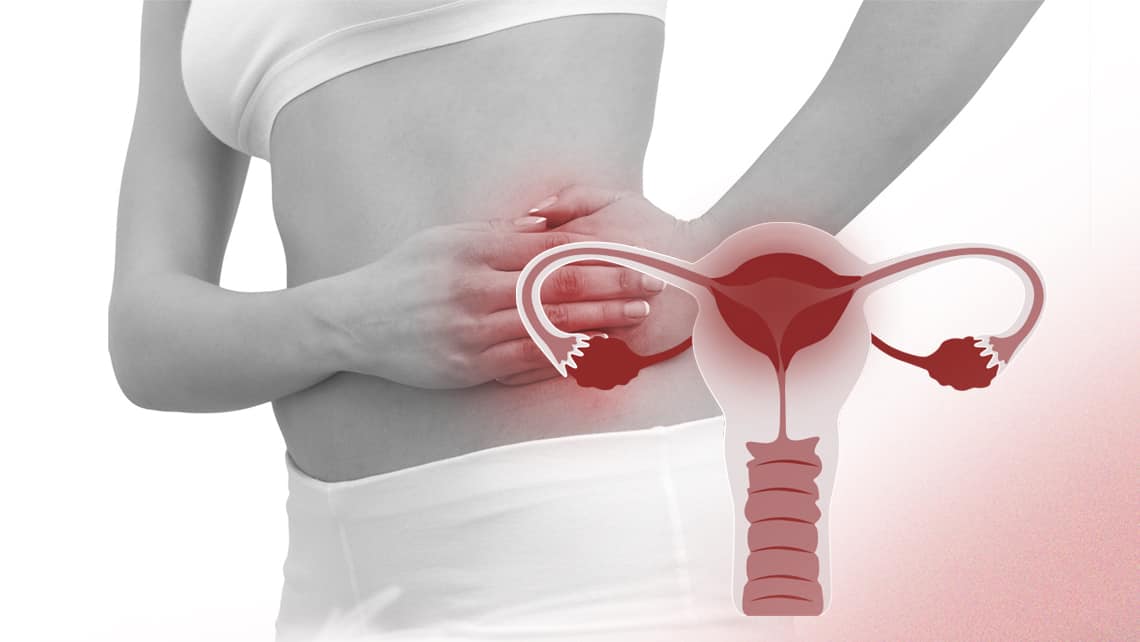
Causes of Pelvic Inflammatory Disease
Pelvic inflammatory disease can be caused by various factors, including:
Sexually Transmitted Infection (STI): The most common cause of PID is by the bacteria chlamydia or gonorrhea. These STIs are frequently due to unprotected sex with someone who has an STI.
Retrograde Bacterial Infection: Due to infection from the normal bacterial flora of the reproductive tract that can travel into the uterus and fallopian tubes during procedures such as childbirth, endometrial biopsy, miscarriage, or the placement of an intrauterine device.
Symptoms of Pelvic Inflammatory Disease
You may not have any symptoms. However, if you do, the symptoms may gradually develop and worsen over time. The common symptoms of pelvic inflammatory disease are fever and/or tenderness in the pelvis, lower abdomen, or lower back. Other symptoms include:
- Fluid or discharge coming from the vagina with an unusual color, texture, or odor
- Bleeding after sexual intercourse or pain with sexual intercourse
- Pain with urination or an increased sensation to urinate
- Period cramps that are more painful or that last longer than usual
Impact of Pelvic Inflammatory Disease
Pelvic inflammatory disease can lead to several conditions:
- Ectopic Pregnancy: An ectopic pregnancy occurs when a fertilized egg implants outside the uterus, typically in a fallopian tube. This could pose serious health risks to the mother and requires immediate medical attention.
- Tubo-ovarian abscess: A serious complication of pelvic inflammatory disease where pus accumulates within the fallopian tube and ovary, causing severe pain and leading to symptoms of a systemic infection
- Chronic Pelvic Pain: Persistent discomfort or dull aching in the lower abdomen and pelvis, lasting for more than 6 months despite treatment.
- Infertility: Myeloradiculopathy occurs when there is damage to the spinal cord and nerve roots.
Diagnosis of Pelvic Inflammatory Disease
Diagnosing spondylolisthesis typically involves:
Medical History: Discussion of symptoms, past medical conditions, and any history of vertebral injuries.
Physical Examination: Assessment of reflexes, muscle strength, and sensation.
Diagnostic Imaging: X-rays to assess spinal alignment, CT scans or MRI scans to visualize spinal structures and detect pars defect or anterior slippage of vertebrae.
Prognosis of Pelvic Inflammatory Disease
The prognosis of pelvic inflammatory disease (PID) generally improves with early diagnosis and prompt treatment with antibiotics. However, untreated or recurrent PID can lead to complications such as chronic pelvic pain, infertility, and increased risk of ectopic pregnancy, emphasizing the importance of timely medical intervention.
Treatment of Pelvic Inflammatory Disease
Treatment options include:
Conservative Treatments: Non-surgical approaches include:
Medications: Such as nonsteroidal anti-inflammatory drugs (NSAIDs) or muscle relaxants for pain management.
Physical Therapy: Exercises to strengthen lumbar and core muscles and improve range of motion.
Epidural Steroid Injections: Targeted injections to reduce inflammation and alleviate pain.
Acupuncture or Chiropractic Care: Some patients find relief through alternative therapies.
Surgical Intervention: When conservative measures are ineffective or symptoms worsen, surgery may be considered:
Decompression Surgery: Removing bone spurs, parts of the vertebrae, or other structures compressing the spinal cord or nerve roots.
Spinal Fusion: Stabilizing the spine by fusing vertebrae together, often after decompression surgery.
Procedure Videos
References
- Jennings LK, Krywko DM. Pelvic Inflammatory Disease. [Updated 2023 Mar 13]. In: StatPearls [Internet]. Treasure Island (FL): StatPearls Publishing; 2024 Jan-. Available from: https://www.ncbi.nlm.nih.gov/books/NBK499959/
- Ross J.Pelvic inflammatory disease: Clinical manifestations and diagnosis. In: UpToDate, Connor RF (Ed), Wolters Kluwer. (Accessed on July 20, 2024.)