
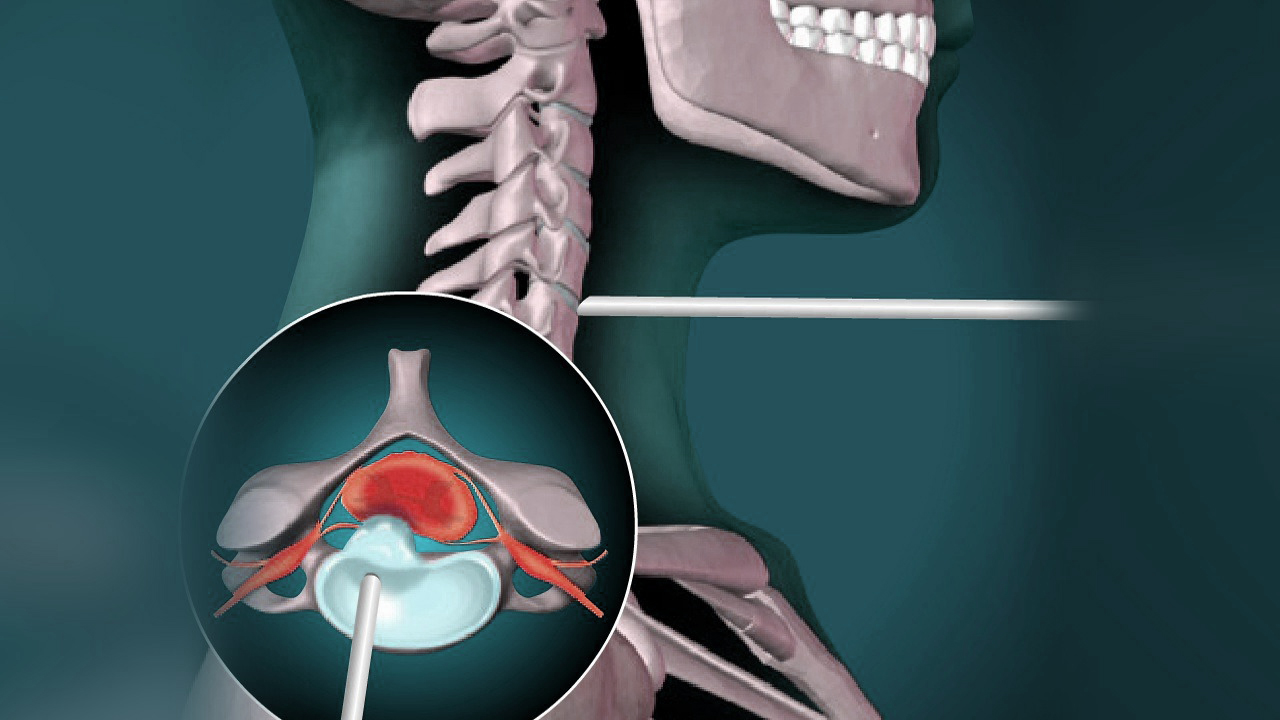
This procedure is most often recommended for patients with cervical disc herniation, nerve compression, or spinal stenosis who continue to have symptoms despite conservative treatments such as physical therapy or epidural steroid injections.
When Is Endoscopic Cervical Discectomy Needed?
Doctors may recommend this procedure if you have:
- Persistent neck pain radiating to the shoulders or arms
- Numbness, tingling, or weakness in the arms or hands
- Cervical radiculopathy (pinched nerve in the neck)
- A herniated disc or bulging disc that presses on spinal nerves
- Spinal stenosis in the cervical spine, causing nerve compression
- Pain or neurological symptoms that do not improve with nonsurgical care
If you’re exploring options for spinal stenosis or herniated discs, you may also benefit from learning about spinal disc decompression as a non-surgical alternative.
How the Procedure Works
Endoscopic anterior cervical discectomy is one of the least invasive ways to address cervical disc herniation. The steps include:
- Preparation – The patient is positioned, and the area of the neck is sterilized. Local anesthesia and light sedation are typically used.
- Small Incision – A tiny incision (usually less than 1 cm) is made in the front of the neck.
- Guided Access – Using x-ray guidance, a thin needle and dilator create a pathway to the damaged disc.
- Endoscope Insertion – A tube is placed, and the spinal endoscope (a small camera with light) is introduced, providing a clear view of the disc and surrounding structures.
- Disc Removal – Microsurgical tools are used to remove the herniated disc material pressing on the nerves.
- Closure – The incision is closed with minimal stitches or even just a small adhesive strip.
The entire surgery typically takes about 30–45 minutes, and most patients go home within a few hours.
Videos
Post-Operative Recovery
One of the biggest advantages of endoscopic cervical discectomy is the fast recovery time. Since the incision is very small, healing is quicker compared to traditional open surgery.
Most patients:
- Go home within 2–3 hours after the procedure
- Require only a bandage or small dressing instead of large stitches
- Return to light daily activities within a few days
- Resume work or exercise faster than with conventional surgery
Your doctor may recommend a short course of physical therapy to help restore strength, flexibility, and spinal mobility.
Goals of Endoscopic Anterior Cervical Discectomy
- Relieve neck and arm pain caused by herniated or bulging discs
- Reduce nerve compression symptoms such as tingling or weakness
- Improve spinal function and mobility without fusion surgery
- Minimize tissue trauma with a smaller incision and faster healing
- Provide a safe alternative when nonsurgical treatments no longer work
Benefits of Endoscopic Cervical Discectomy
- Minimally invasive: avoids major muscle or bone disruption
- Preserves spinal mobility compared to fusion surgeries
- Same-day discharge – no hospital stay required
- Smaller scar and reduced risk of complications
- Local anesthesia rather than full general anesthesia in many cases
- Faster return to daily activities
If you are also exploring other surgical options, you may want to compare this with percutaneous discectomy, another minimally invasive approach.
Risks and Side Effects
Like all medical procedures, endoscopic anterior cervical discectomy carries some risks, although they are relatively low. Potential complications include:
- Nerve injury
- Bleeding
- Infection
- Leakage of spinal fluid
- Rare complications related to anesthesia
Your surgeon will discuss the risks and ensure this is the right procedure for your condition.
Conclusion
Endoscopic anterior cervical discectomy is a proven, minimally invasive treatment for herniated discs and cervical radiculopathy. By using advanced endoscopic technology, it offers faster recovery, smaller incisions, and effective pain relief while preserving spinal mobility.
If you are struggling with persistent neck or arm pain that has not improved with conservative care, this procedure may be an excellent option to help you return to a healthier, more active lifestyle.
Resources
https://novusspinecenter.com/pain-treatments/endoscopic-discectomy
https://www.atlanticspinecenter.com/treatments/endoscopic-discectomy/