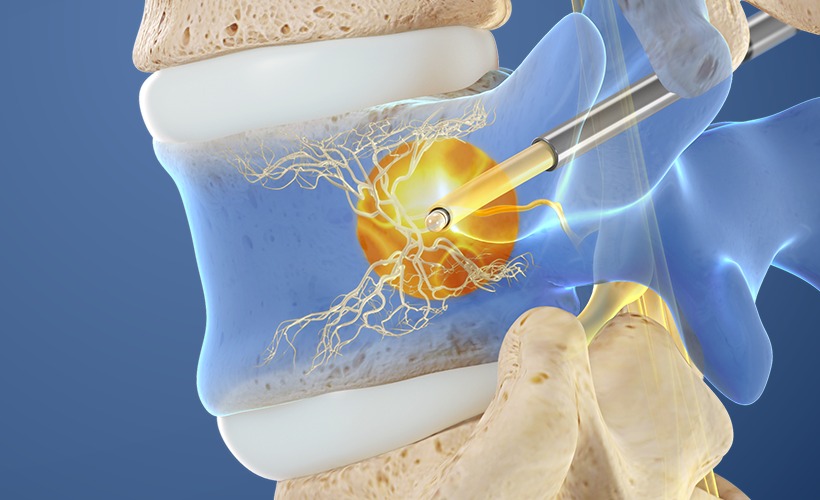
These changes lead to inflammation and nerve sensitization within the vertebral body, contributing to chronic low back pain. Intracept aims to disrupt these nerve signals, leading to a reduction in pain.
Procedure: Intracept
The procedure is performed under local anesthesia to numb the treatment area and ensure patient comfort. A specialized radiofrequency probe is inserted through the skin into the vertebral body through a small incision in the back. The probe delivers radiofrequency energy to selectively disrupt the basivertebral nerve responsible for transmitting pain signals from the vertebral endplates. By targeting the nerve, the procedure interrupts pain transmission pathways and provides long-term relief from chronic low back pain associated with Modic changes.
Videos:
Post-operative Care for Intracept:
Patients may experience gradual pain relief over several weeks as the nerve ablation disrupts pain signals. Physical therapy may be recommended to improve spinal stability, flexibility, and overall function. Recovery is generally rapid, with most patients able to resume normal activities within a short period.
Goals of Intracept:
Long term pain relief
Prevent surgery
Avoid opioid pain medications
Benefits of Intracept:
Benefits of Intracept include:
Minimally invasive
Low risk of complications
Short recovery time
Directly targeting source of pain
Side Effects:
Risk of infection
Discomfort at procedure site
Minor bleeding
Resources:
https://texasspineandscoliosis.com/treatment/intracept.html
https://my.clevelandclinic.org/health/procedures/intracept-procedure
https://painandspinespecialists.com/treatments/the-intracept-procedure/