
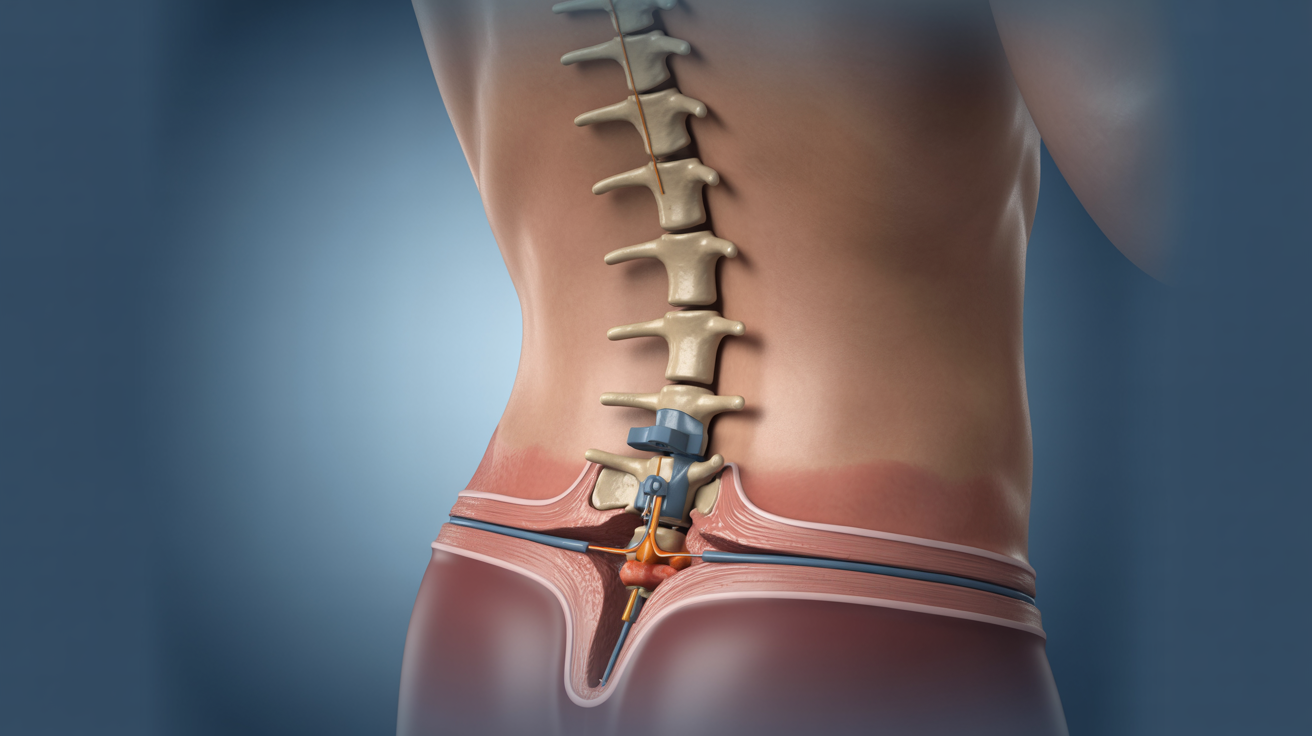
The Minuteman lumbar fusion procedure is a breakthrough minimally invasive spinal fusion technique designed to treat lumbar spinal stenosis and instability. Using a specialized interspinous fusion device, this innovative approach achieves permanent spinal stabilization through a 1-2 inch incision—offering faster recovery and less tissue disruption than traditional lumbar fusion surgery.
How the Minuteman Lumbar Fusion Works
The Minuteman system uses a unique interspinous fusion device inserted between the spinous processes (the bony projections at the back of each vertebra) rather than traditional pedicle screws used in conventional lumbar fusion. This device stabilizes the affected spinal segment while preserving surrounding muscles and ligaments. The minimally invasive approach decompresses the spinal canal and fuses vertebrae to eliminate painful motion and nerve compression.
Conditions that often benefit include:
-
Lumbar spinal stenosis with instability
-
Degenerative disc disease requiring lumbar fusion
-
Spondylolisthesis (vertebral slippage)
-
Chronic lower back pain from spinal instability
-
Failed conservative treatments for spinal stenosis
Step-by-Step Procedure
Preparation
The Minuteman lumbar fusion procedure is performed under general anesthesia with patients positioned lying face down. Advanced imaging guides precise placement of the fusion device.
Minimally Invasive Access
A small 1-2 inch incision is made in the midline of the lower back. Muscles are gently separated rather than cut, minimizing tissue trauma compared to traditional lumbar fusion and preserving the natural support structures.
Device Placement
The surgeon removes the ligamentum flavum to decompress the spinal nerves and create space for the Minuteman device. The specialized interspinous fusion implant is carefully positioned between the spinous processes of the affected vertebrae.
Stabilization and Fusion
The device immediately stabilizes the spinal segment while bone graft material promotes permanent lumbar fusion over 3-6 months. No traditional pedicle screws or rods are required.
Closure
The small incision is closed with sutures, and most patients are ready for discharge the same day. The entire procedure typically takes 60-90 minutes.
Key Benefits of the Minuteman Lumbar Fusion
-
Ultra-minimally invasive: Only 1-2 inch incision required
-
Muscle-sparing technique preserves back strength and flexibility
-
Same-day outpatient surgery in most casesyoutube
-
93% successful fusion rate reported in clinical studies
-
Faster recovery compared to traditional lumbar fusion surgery
-
Immediate spinal stabilization with progressive fusion
-
Reduced blood loss and surgical trauma compared to open lumbar fusion
-
Lower infection risk due to smaller incision
Recovery and Aftercare
Most patients walk within hours of the Minuteman lumbar fusion and go home the same day. Mild incision site discomfort is managed with prescribed pain medication. Avoid bending, lifting over 10 pounds, or twisting for the first 4-6 weeks to allow initial healing. Physical therapy typically begins 2-4 weeks post-procedure to restore core strength and mobility. Most patients return to light activities within 2-3 weeks and full activities within 8-12 weeks. Complete lumbar fusion occurs over 3-6 months as bone grows around the device.
Possible Risks and Side Effects
Though minimally invasive, potential complications include:
-
Incomplete fusion (pseudarthrosis)
-
Device migration or malposition
-
Infection at the surgical site
-
Nerve injury during decompression
-
Persistent pain or adjacent segment degeneration
Report any fever, increasing pain, wound drainage, or new numbness to your surgeon immediately.
Related Conditions and Treatments
The Minuteman lumbar fusion procedure offers an advanced alternative for patients who need spinal fusion but want to avoid traditional open surgery.
Your care team may also discuss or combine with:
Lumbar Spinal Stenosis: The primary condition treated by this procedure
Spinal Cord Stimulator Implant: A non-fusion option for chronic nerve pain management
Lumbar Radiofrequency Neurotomy: Non-surgical pain relief for facet joint issues
These related treatments help you understand the full spectrum of options from conservative care to advanced surgical solutions.
Is the Minuteman Lumbar Fusion Right for You?
This advanced minimally invasive lumbar fusion technique is typically considered when:
-
Spinal stenosis causes severe leg pain or walking difficulty
-
Conservative treatments (medications, injections, physical therapy) have failed
-
Imaging confirms spinal instability or significant stenosis
-
You prefer a minimally invasive approach over traditional lumbar fusion
-
Same-day surgery and faster recovery are priorities
A consultation with a spine specialist will determine if the Minuteman lumbar fusion procedure is appropriate based on your spinal anatomy, symptoms, and overall health.
Resources
https://spinalsimplicity.com/minuteman/
https://amitsharmamd.com/services/minuteman-procedure/
https://longhornbrainandspine.com/minuteman-procedure/