
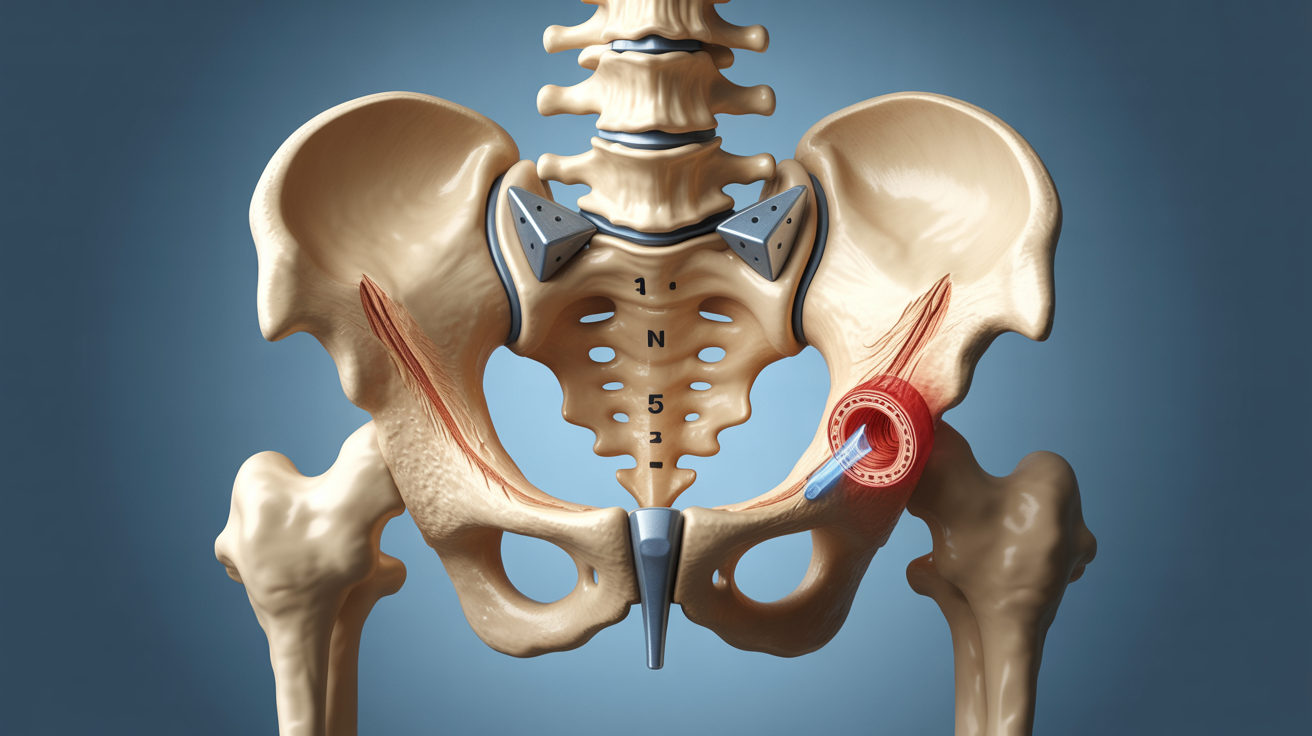
Sacroiliac (SI) joint fusion is a minimally invasive surgical procedure that permanently stabilizes the SI joint to relieve chronic lower back and pelvic pain. Using specialized titanium implants placed across the joint, this procedure eliminates painful motion and provides long-term relief when conservative treatments have failed.
How Sacroiliac Joint Fusion Works
The procedure uses small triangular titanium implants that are inserted across the SI joint to create permanent stabilization. These implants have a porous surface that encourages bone growth, resulting in solid fusion over 3-6 months. By eliminating movement at the SI joint, the source of pain is addressed directly and permanently.
Conditions that often benefit include:
-
Chronic SI joint dysfunction or instability
-
Degenerative sacroiliitis (SI joint arthritis)
-
SI joint disruption from trauma or injury
-
Persistent SI joint pain unresponsive to injections and physical therapy
-
Pregnancy-related SI joint instability that doesn’t resolve
Step-by-Step Procedure
Preparation
The procedure is performed under general anesthesia with patients positioned lying on their side. Real-time X-ray imaging (fluoroscopy) guides precise implant placement throughout the surgery.
Minimally Invasive Access
A small 2-3 inch incision is made on the side of the buttock or lateral thigh. Muscles and soft tissues are gently separated rather than cut, minimizing tissue damage and preserving the natural anatomy.
Using specialized instruments and fluoroscopic guidance, typically three titanium implants are positioned across the SI joint from the ilium into the sacrum. The triangular implant design provides immediate stability while the porous coating promotes long-term bone integration.
Joint Preparation
The cartilage surfaces within the SI joint are prepared (decorticatied) to encourage bone fusion. Some systems allow for bone graft material to be added to enhance fusion.
Closure
The incision is closed with sutures or surgical staples, and patients are typically ready for discharge the same day. The entire procedure usually takes 45-60 minutes.i
Key Benefits of Sacroiliac Joint Fusion
-
Minimally invasive approach with 2-3 inch incision
-
Same-day outpatient procedure in most cases
-
Immediate stabilization of the SI joint
-
High success rates for long-term pain relief (70-80% of patients)
-
Faster recovery compared to traditional open fusion
-
Reduced reliance on pain medications and injections
-
Minimal muscle cutting preserves back strength
Recovery and Aftercare
Most patients return home the same day with crutches for support. Toe-touch weight bearing is maintained for the first 6 weeks to allow initial healing. Ice can be applied to the incision area for 20 minutes at a time to manage discomfort. At 6 weeks post-surgery, physical therapy begins to restore strength and mobility. Most patients return to desk work within 2-3 weeks and physical activities within 8-12 weeks. Complete fusion typically occurs within 3-6 months.
Possible Risks and Side Effects
Though minimally invasive, potential complications include:
-
Incomplete fusion (non-union) requiring revision
-
Nerve injury during implant placement
-
Infection at the surgical site
-
Implant malposition or migration
-
Persistent pain or adjacent segment issues
Contact your surgeon immediately if you experience fever, increasing pain, drainage from the incision, or new numbness in your legs.
Related Conditions and Treatments
SI joint fusion is considered when conservative treatments have not provided lasting relief for SI joint dysfunction.
Your care team may also discuss or combine with:
Sacroiliac Joint Pain: The underlying condition treated by this procedure
Sacroiliac Joint Steroid Injection: A non-surgical option typically tried before fusion
Arthritis: Degenerative changes that can affect the SI joint
These related treatments help you understand the progression from conservative care to surgical intervention.
Is Sacroiliac Joint Fusion Right for You?
This procedure is typically considered when:
-
SI joint pain has lasted more than 6 months despite conservative treatment
-
At least three SI joint steroid injections have provided only temporary relief
-
Physical therapy and medications have failed to control symptoms
-
Diagnostic SI joint injections confirmed the SI joint as the pain source
-
Pain significantly limits daily activities, work, or quality of life
A consultation with a spine specialist will determine if SI joint fusion is appropriate based on your imaging studies, symptoms, and treatment history.
Resources
https://my.clevelandclinic.org/health/procedures/si-sacroiliac-joint-fusion
https://www.spine-health.com/treatment/spinal-fusion/how-sacroiliac-joint-fusion-performed
https://innovative-spine.com/spinal-treatment-options/sacroiliac-joint-fusion/