Living in New York City demands movement, speed, and endurance. Long commutes, packed schedules, concrete sidewalks, and high-pressure work environments all place stress on the lower back.
For patients with sciatica, these daily demands can worsen symptoms significantly.
Sciatica occurs when the sciatic nerve becomes compressed or irritated, often due to a herniated disc or spinal narrowing. The result is pain that radiates from the lower back into the buttock and down the leg.
In a city like NYC, certain lifestyle factors can increase the frequency and severity of flare-ups.
What Is Sciatica?
Sciatica is not a diagnosis itself but a symptom of nerve compression in the lower spine.
Common causes include:
- Lumbar disc herniation
• Degenerative disc disease
• Spinal stenosis
• Muscle inflammation affecting nerve pathways
If narrowing of the spinal canal is suspected, you can learn more about Spinal Stenosis treatment and how it contributes to nerve compression.
Symptoms often include:
- Sharp or burning pain radiating down one leg
• Numbness or tingling
• Leg weakness
• Worsening pain when sitting
How NYC Commutes Trigger Sciatica
Prolonged Sitting on Subways and Buses
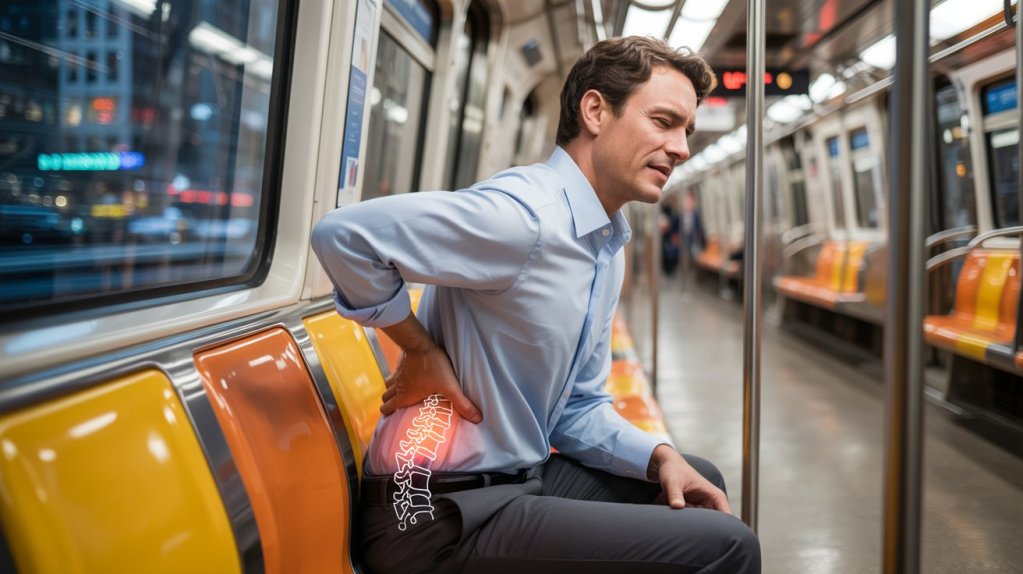
Many professionals spend one to two hours daily commuting. Sitting for extended periods increases pressure on the lumbar discs, especially when posture is poor.
When the spine remains flexed for long periods, disc pressure increases. For someone with a disc bulge, this can intensify nerve irritation.
Vibrations and Impact
Regular exposure to road vibrations from taxis or buses can worsen existing disc problems. Repeated micro-shock to the spine may aggravate inflammation surrounding the sciatic nerve.
The Urban Environment and Lower Back Stress
Walking on Concrete
Walking is generally beneficial for spine health. However, prolonged walking on hard concrete sidewalks reduces natural shock absorption.
Over time, this repetitive impact may contribute to lower back strain, especially in patients with pre-existing disc issues.
Uneven Surfaces and Subway Stairs
Navigating uneven sidewalks or climbing subway stairs increases stress on the hips and lower back. Sudden shifts in balance can trigger muscle tightness, which may compress already sensitive nerves.
Carrying Heavy Bags
Many NYC residents carry laptops, gym bags, groceries, or laundry for several blocks. Carrying weight on one side of the body creates uneven spinal loading, which may worsen sciatica symptoms.
Office Life in Midtown and Downtown Manhattan
Desk Job Posture
Long hours at a desk weaken core muscles and encourage forward head posture. Without proper lumbar support, the lower back absorbs continuous strain.
This is one of the most common contributing factors we see in patients visiting a
Pain Management Specialist in NYC.
High Stress and Muscle Tension
NYC work culture can be intense. Chronic stress increases muscle tension, particularly in the lower back and hips. Tight muscles can compress nerves and amplify pain perception.
Lifestyle Factors Unique to City Living
Fashion Over Function
High heels and unsupportive footwear shift weight forward, altering spinal alignment. This places added stress on the lower back and can trigger nerve irritation.
Switching to supportive footwear during commutes can significantly reduce strain.
Small Living Spaces
Limited apartment space may restrict stretching, exercise, or ergonomic workstation setup. Improvised home offices often lack proper lumbar support, contributing to prolonged strain.
When Sciatica Becomes More Than a Nuisance
Occasional lower back discomfort is common. However, persistent symptoms should not be ignored.
Seek medical evaluation if you experience:
- Pain lasting more than several weeks
• Radiating leg pain that worsens
• Numbness or weakness
• Difficulty standing or walking
For patients with confirmed disc herniation that does not improve, surgical options such as
Microdiscectomy may be considered after conservative care fails.
Managing Sciatica While Living in NYC
Practical adjustments can reduce flare-ups:
- Wear supportive shoes during long walks
• Take standing breaks every hour during desk work
• Strengthen core muscles with guided exercises
• Use backpacks instead of single-strap bags
• Stretch hip flexors and hamstrings regularly
If pain persists despite these strategies, professional evaluation is important.
Patients in Queens can access care at our Pain Management Astoria location.
Patients on Long Island can visit our Pain Management Plainview location.
You can also read real patient experiences on our Reviews page.
Take Control of Sciatica in NYC
City life does not have to mean living with daily nerve pain. With accurate diagnosis and targeted treatment, most patients experience significant relief.
If your symptoms are limiting your work, commute, or quality of life, schedule an evaluation through our Contact page to determine the most appropriate treatment plan for your condition.
Early intervention can prevent minor irritation from becoming chronic nerve damage.