Introduction
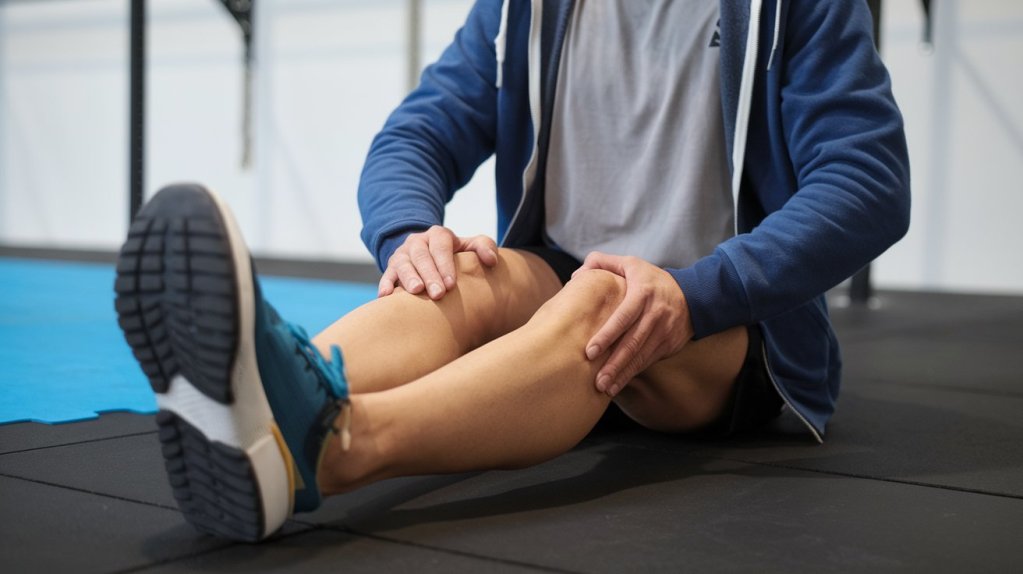
Knee pain can make everyday activities — like walking, climbing stairs, or getting up from a chair — feel like a challenge. Whether caused by injury, overuse, or a chronic condition, finding relief that doesn’t rely on medication is essential.
At Maywell Health, our NYC pain specialists often recommend safe, targeted exercises to strengthen the muscles that support the knee, reduce stiffness, and improve joint function. These exercises work hand-in-hand with advanced treatments like regenerative therapy and physical therapy to help patients recover faster and stay pain-free longer.
In this guide, you’ll learn five of our most recommended at-home knee exercises that can:
- Decrease inflammation and stiffness
- Strengthen stabilizing muscles
- Improve mobility and joint function
- Support long-term recovery
Let’s get started with the first exercise.
Exercise #1 – Quadriceps Sets
Quadriceps sets are a foundational exercise for knee pain relief. They target the muscles on the front of your thigh — especially the vastus medialis oblique (VMO) — which plays a critical role in stabilizing the kneecap and supporting healthy movement patterns.
How to Perform:
- Sit on the floor or a firm surface with both legs extended straight in front of you
- Tighten the muscle at the front of your thigh by pressing the back of your knee gently down toward the floor
- Hold the contraction for 5–10 seconds, then relax for 5 seconds
- Repeat 10–15 times, completing 2–3 sets per session
Benefits:
- Activates the VMO to support kneecap alignment
- Reduces joint stress by improving quadriceps tone
- Requires no equipment and can be done almost anywhere
Safety Tips:
- Keep your toes and kneecap pointed directly upward — avoid internal rotation
- Reduce hold time or reps if you feel any sharp discomfort
- Pair with hamstring and calf stretches to promote muscular balance
Pro Tip:
This exercise is especially effective when integrated into a full physical therapy plan. Schedule a visit with our NYC team to learn how it fits into your personalized recovery strategy.
Exercise #2 – Straight Leg Raises
Straight leg raises are ideal for building strength in the quadriceps without placing direct pressure on the knee joint. This makes them especially useful during early rehabilitation, post-injection recovery, or for those with limited mobility.
How to Perform:
- Lie on your back with one leg bent (foot flat on the floor) and the other leg straight
- Tighten the quadriceps of your straight leg and lift it about 12 inches off the ground
- Hold for 3–5 seconds, then slowly lower back down
- Repeat 10–15 times per leg, completing 2–3 sets per session
Benefits:
- Strengthens the thigh without stressing the knee joint
- Improves kneecap tracking and joint stability
- Supports recovery after injections, injury, or surgery
Safety Tips:
- Keep your lower back flat on the ground — avoid arching
- Move slowly and with control; don’t let the leg drop
- Reduce lift height or reps if you feel strain or discomfort
Pro Tip:
As your strength improves, this exercise can be progressed to more dynamic movements. Book a consultation with our Maywell Health team to customize your next steps.
Exercise #3 – Hamstring Stretch
Tight hamstrings can place extra stress on the knee joint, contributing to pain and poor movement mechanics. This gentle stretch helps release tension, improve flexibility, and support better leg alignment.
How to Perform:
- Lie flat on your back and loop a towel or resistance band around the ball of one foot
- Keep your leg straight and gently pull it toward you until you feel a stretch in the back of your thigh
- Hold for 20–30 seconds, then switch sides
- Repeat 2–3 times per leg
Benefits:
- Increases hamstring flexibility to reduce strain on the knee
- Enhances overall leg mobility and movement efficiency
- Complements strengthening exercises for well-balanced support
Safety Tips:
- Keep your hips level and your opposite leg relaxed on the floor
- Move into the stretch slowly and avoid bouncing
- Stop immediately if you feel sharp or radiating pain
Pro Tip:
For the best results, pair stretching with strengthening exercises like Quadriceps Sets or Straight Leg Raises. A balanced program can help prevent recurring pain.
Exercise #4 – Calf Raises
Calf raises help strengthen the muscles in your lower leg — particularly the gastrocnemius and soleus — which play a key role in supporting knee alignment and improving ankle stability. Strong calves reduce compensatory strain on the knee joint during walking, standing, or climbing stairs.
How to Perform:
- Stand with your feet hip-width apart, near a wall or chair for support
- Slowly rise onto the balls of your feet, lifting your heels off the ground
- Hold for 2–3 seconds at the top, then lower back down with control
- Repeat 12–15 times, completing 2–3 sets per session
Benefits:
- Strengthens the lower leg to support proper knee alignment
- Improves balance and ankle stability
- Can be progressed over time to include single-leg calf raises
Safety Tips:
- Perform the movement slowly — avoid bouncing or wobbling
- Distribute your weight evenly across both feet
- Reduce your range of motion if you feel discomfort in your knees or ankles
Pro Tip:
Combine calf raises with knee-focused exercises to build a well-rounded lower-body routine that enhances joint protection and control.
Exercise #5 – Mini Wall Squats
Mini wall squats are a safe and effective way to strengthen your quadriceps, glutes, and hamstrings without putting excessive pressure on your knees. They’re ideal for building joint stability while maintaining proper form and control.
How to Perform:
- Stand with your back flat against a wall and your feet shoulder-width apart, about 12 inches from the wall
- Slowly slide down until your knees are at a 45-degree angle (no lower)
- Hold the position for 5–10 seconds, then return to standing
- Repeat 8–12 times, completing 2–3 sets per session
Benefits:
- Engages multiple lower-body muscles to support knee stability
- Trains proper knee alignment and reduces strain during daily activities
- Builds strength without requiring a full deep squat
Safety Tips:
- Keep your knees aligned with your second toes — avoid letting them collapse inward
- Don’t bend beyond a 45-degree angle to protect knee cartilage
- Use a rolled towel behind your lower back for extra comfort if needed
Pro Tip:
This exercise is excellent for progressing into more functional movements. To personalize your program, book an evaluation with our NYC pain management team at Maywell Health.
Conclusion
Knee pain doesn’t have to hold you back. Incorporating these five simple, specialist-recommended exercises — Quadriceps Sets, Straight Leg Raises, Hamstring Stretches, Calf Raises, and Mini Wall Squats — into your routine can help reduce pain, strengthen key muscle groups, and restore mobility over time.
When done consistently and safely, these movements not only support recovery but also prevent future flare-ups by promoting joint stability and muscular balance.
At Maywell Health, we take a comprehensive approach to knee pain relief — combining movement-based therapy, regenerative treatments, and personalized care. Whether you’re recovering from an injury, managing arthritis, or looking to avoid surgery, our NYC team is here to help you move better and live pain-free.
Ready to take the next step? Schedule a consultation with Maywell Health today and start your customized knee recovery plan.
Frequently Asked Questions (FAQ)
What are the best exercises for knee pain relief?
The best exercises for knee pain relief include Quadriceps Sets, Straight Leg Raises, Hamstring Stretches, Calf Raises, and Mini Wall Squats. These movements help strengthen supporting muscles, reduce stiffness, and improve joint stability.
Can I do these exercises at home without equipment?
Yes. All five exercises can be done at home using minimal or no equipment. A towel, chair, or wall may be used for support, making these exercises easy to integrate into any daily routine.
How often should I do knee exercises for pain relief?
Most exercises can be done 3–5 times per week, depending on your condition and tolerance. It’s best to start slowly and increase frequency or intensity under the guidance of a physical therapist or pain specialist.
Is it safe to exercise with knee pain?
In most cases, gentle, controlled exercises are safe and can actually reduce pain. However, if you experience sharp or worsening pain during any movement, stop immediately and consult your provider.
When should I see a knee pain specialist?
If your knee pain lasts more than a few weeks, limits your activity, or doesn’t improve with rest and basic care, it’s time to see a specialist. Maywell Health offers personalized evaluations and advanced treatments for lasting relief.