
TLDR
A ketamine infusion for chronic pain usually takes between one and four hours depending on your protocol, plus about 30 to 60 minutes of recovery afterward. You will check in, have your blood pressure and heart rate monitored, get an IV placed, and then rest in a quiet room while the medication runs slowly. Most people feel the effects within 10 to 15 minutes: a floating or detached sensation, mild visual drift, sometimes a sense that time has slowed. It is strange but not usually frightening, and the nurse or physician stays nearby the whole time. Side effects like nausea, dizziness, or blurry vision are common and short-lived. You cannot drive afterward, so arrange a ride before you come. Pain relief may show up during the infusion, later that evening, or over the following days, and most protocols involve a series of sessions rather than a single one.
Before You Arrive
The day before your infusion, a few things make the experience noticeably smoother.
Eating and drinking. Most practices ask you to avoid solid food for about six hours beforehand and clear liquids for two. This is not arbitrary. Ketamine can cause nausea, and an empty stomach reduces the odds of vomiting during the session.
Medications. Take your regular medications unless you were specifically told otherwise. If you were asked to hold or adjust something, particularly a benzodiazepine, confirm the instructions with the prescribing physician rather than guessing.
Your ride. You cannot drive, take a scooter, or bike home. You should not operate anything mechanical for the rest of the day. In the city, most patients arrange a friend, a family member, or a car service. Some clinics will not start the infusion until you confirm how you are getting home.
What to wear and bring. Loose clothing with sleeves that roll up easily. Headphones if music helps you settle. A sleep mask if you would rather block out light. Some people bring a small blanket, since infusion rooms often run cold.
Check-In and Pre-Infusion Assessment
You will arrive, check in, and be brought to your treatment room. Before anything starts, staff will take your vital signs. Blood pressure matters most here, because ketamine reliably raises it during the infusion. If your reading is unexpectedly high that day, the session may be postponed. That is a safety decision, not a rejection.
The physician or nurse will review a few things with you: how your pain has been since your last visit, any changes in medication, whether you ate, and whether you had any lingering effects from a previous session if this is not your first.
You will be asked to rate your pain. Do this honestly rather than optimistically. These numbers guide dosing adjustments across the series, and rounding down to seem like a good patient works against you.
Getting the IV Placed
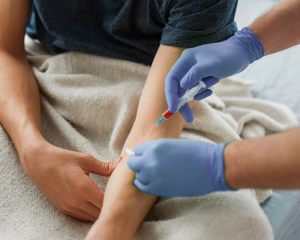
An IV goes into a vein, usually in the hand or forearm. It is the same experience as a blood draw with a slightly longer pinch. If you are a hard stick, say so upfront rather than after three attempts.
Monitoring equipment goes on around the same time. Expect a blood pressure cuff that inflates automatically every 5 to 15 minutes, a pulse oximeter clip on your finger, and depending on the protocol, EKG leads on your chest. The cuff squeezing on schedule is the thing most patients find mildly annoying, especially once the medication is working.
The Infusion Itself
The medication runs on an infusion pump at a slow, controlled rate calculated by weight. This is the part that surprises people: it is not an injection that hits all at once. It builds gradually over the length of the session.
First 10 to 15 minutes. Most people notice something here. A lightness. A sense of the body feeling further away than usual. Sometimes a faint metallic taste or a warm flush.
Peak effects. As the dose accumulates, the dissociative sensation deepens. Common descriptions include floating, feeling like you are watching yourself from slightly outside, colors seeming more saturated, music sounding unusually layered and dimensional, and time stretching so that ten minutes feels like an hour. Thoughts may wander in loose, associative ways.
This is expected. It is a known property of the medication, it is temporary, and it resolves completely as the infusion tapers off. The staff has seen it thousands of times.
If it becomes uncomfortable. Some people experience anxiety during the dissociative phase. Tell the staff. Do not wait it out silently trying to be tough. Depending on the situation, the infusion rate can be slowed, a medication for anxiety or nausea can be given, or someone can simply sit with you and talk you through it. The infusion can also be stopped entirely if needed.
Physical sensations along the way. Nausea is the most common side effect and is often managed preemptively with an anti-nausea medication. Blurred or doubled vision is normal. So is dizziness if you move your head quickly. Your blood pressure will read higher than baseline. Your mouth may feel dry.
What you should not expect. You will not be unconscious. You will not be unable to speak. Doses used for chronic pain are far below anesthetic doses, and you remain able to communicate throughout.
How Long It Lasts
Protocols vary meaningfully between practices and depend on your condition.
Sessions in the 40-minute to one-hour range are common for general chronic pain and neuropathic pain. Longer sessions, sometimes running four hours or more across consecutive days, are used in some CRPS protocols, where the evidence for ketamine is strongest.
Your physician will explain your specific protocol during your consultation. If nobody has explained it, ask before your first appointment.
The Recovery Period
When the pump stops, effects fade over roughly 15 to 45 minutes. You will stay in the room during this time while staff monitor you.
You may feel groggy, slightly unsteady, or emotionally raw. Some patients feel unexpectedly emotional afterward. That is a recognized response and not a sign that something went wrong.
Before discharge, staff will check that your vital signs have returned near baseline, that you can walk without significant unsteadiness, that you are oriented and communicating normally, and that your ride is present.
Do not rush this part. Standing up too fast after an infusion is how people end up dizzy in a hallway.
The Rest of Your Day
Plan to do nothing. Go home, eat something light, rest.
Do not drive, sign legal or financial documents, make important decisions, drink alcohol, take a sleeping medication unless it is on your regular list, or handle anything requiring sharp coordination.
Mild grogginess, a slight headache, or a bit of nausea into the evening is normal. Most people feel back to baseline by the next morning.
When Pain Relief Actually Shows Up
This varies more than most patients expect, and setting realistic expectations here matters.
Some people feel a shift during the infusion itself. Others notice nothing until that evening, or the next morning, or two or three days later. And some feel very little after the first session and improve across subsequent ones.
Duration also varies widely. Relief may last days, weeks, or in some cases a few months. It is usually partial rather than complete. A meaningful outcome often looks like pain dropping from an 8 to a 5, with better sleep and more capacity to move, rather than pain disappearing.
This is why keeping a simple daily pain log between sessions is genuinely useful. Memory smooths things out and you will underestimate your own improvement without written notes.
Why It Is Usually a Series
Single infusions rarely produce durable relief in chronic pain. Most protocols involve an initial series, often somewhere between three and six sessions over one to three weeks, followed by maintenance infusions spaced according to how long your relief holds.
Your physician will adjust dose and spacing based on how you respond. If you are getting three weeks of relief, the maintenance schedule looks different than if you are getting three months.
Where Ketamine Fits Alongside Other Treatments
Ketamine is rarely the only thing happening in a pain plan. It works best as part of a broader approach, and the infusion window is often when patients can finally make progress in physical therapy because the pain has quieted enough to move.
For some patients, infusions become a bridge to something longer-lasting. If your relief holds well but only briefly, a spinal cord stimulator or peripheral nerve stimulation may deliver continuous relief without repeat visits. For patients whose pain has a structural source, targeted procedures like an epidural steroid injection or a sacroiliac joint injection may address the actual driver.
Conditions like spinal stenosis, sciatica, and sacroiliac joint pain usually have clearer mechanical targets, and treatments like SI joint fusion, Minuteman lumbar fusion, or microdiscectomy address the source directly. Ketamine tends to be more useful when the nervous system itself has become part of the problem.
Questions Worth Asking Before Your First Session
- How long will my infusion be, and what dose am I starting at?
- Will a physician be on site the entire time?
- Will I get anti-nausea medication preemptively?
- What happens if I get anxious partway through?
- How many sessions are we planning before we evaluate whether this is working?
- What does the full series cost, and what does my insurance cover?
Any practice that gets impatient with these questions is telling you something.
Coming In for Your First Infusion in NYC
Walking into an infusion appointment knowing what the room looks like, how long you will be there, and what the medication actually feels like removes most of the anxiety patients bring to it. The experience is usually far less dramatic than what people imagine on the way over.
Our pain physicians walk every patient through their protocol before the first session, and monitoring is handled by clinical staff who stay with you throughout.
If you have questions about ketamine therapy or want to find out whether it fits your situation, reach out to schedule a consultation.